

New here? Join The Mobility Signal for on-the-ground intelligence from Southeast Asia’s automotive and mobility markets, built for industry leaders, investors, private equity, venture capital and advisors who need to understand what is changing and what it means.
Executive Summary
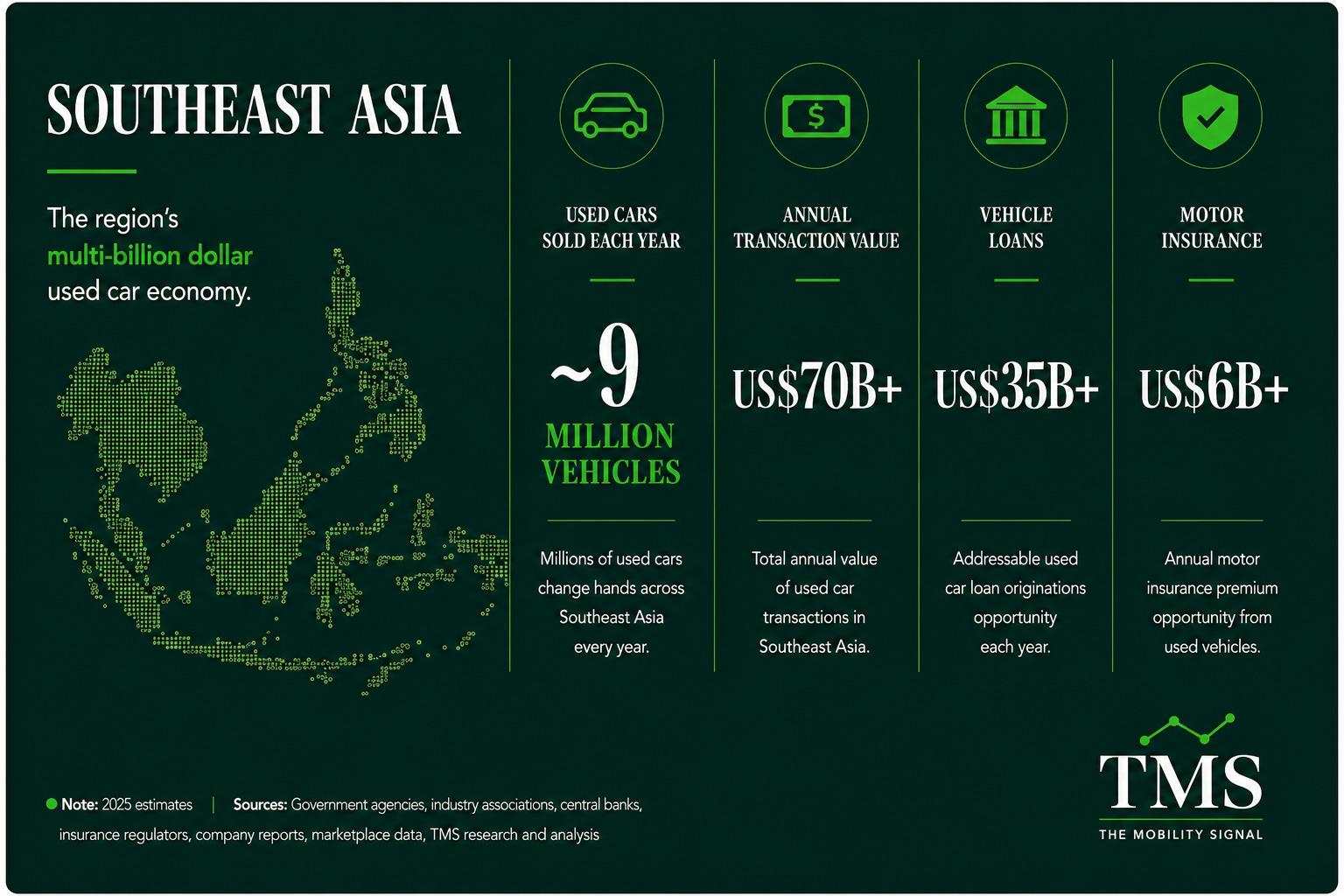
The automotive industry has traditionally measured success through new vehicle sales. Yet every new vehicle eventually enters a much larger secondary economy. Based on 2025 regional estimates, approximately 9 million used vehicles change hands each year, generating an estimated US$70 billion in annual transaction value and creating significant opportunities for dealerships, lenders, insurers and digital marketplaces.
This report presents a bottom-up assessment of Southeast Asia’s used car economy by analyzing vehicle registrations, ownership turnover, financing penetration, motor insurance and publicly available industry data across six major markets.
Key Findings
Approximately 9 million used vehicles change hands each year.
Southeast Asia’s used car economy exceeds US$70 billion annually.
Used vehicle financing represents more than US$35 billion in annual loans.
Used vehicle insurance generates more than US$6 billion in annual premiums.
Market opportunity depends on market structure—not market size alone.
TMS Insight 01
A vehicle is manufactured once, but monetized many times.
Where the Opportunity Lies
Every major Southeast Asian economy has an active used vehicle market, but their size, maturity and accessibility vary considerably. Indonesia represents the region’s largest opportunity by transaction value, followed by Thailand and the Philippines, reflecting differences in vehicle ownership, financing penetration and market maturity.
Transaction value measures scale, but it does not determine how easily businesses can capture that opportunity. The following framework introduces the additional dimensions that shape market opportunity across Southeast Asia.
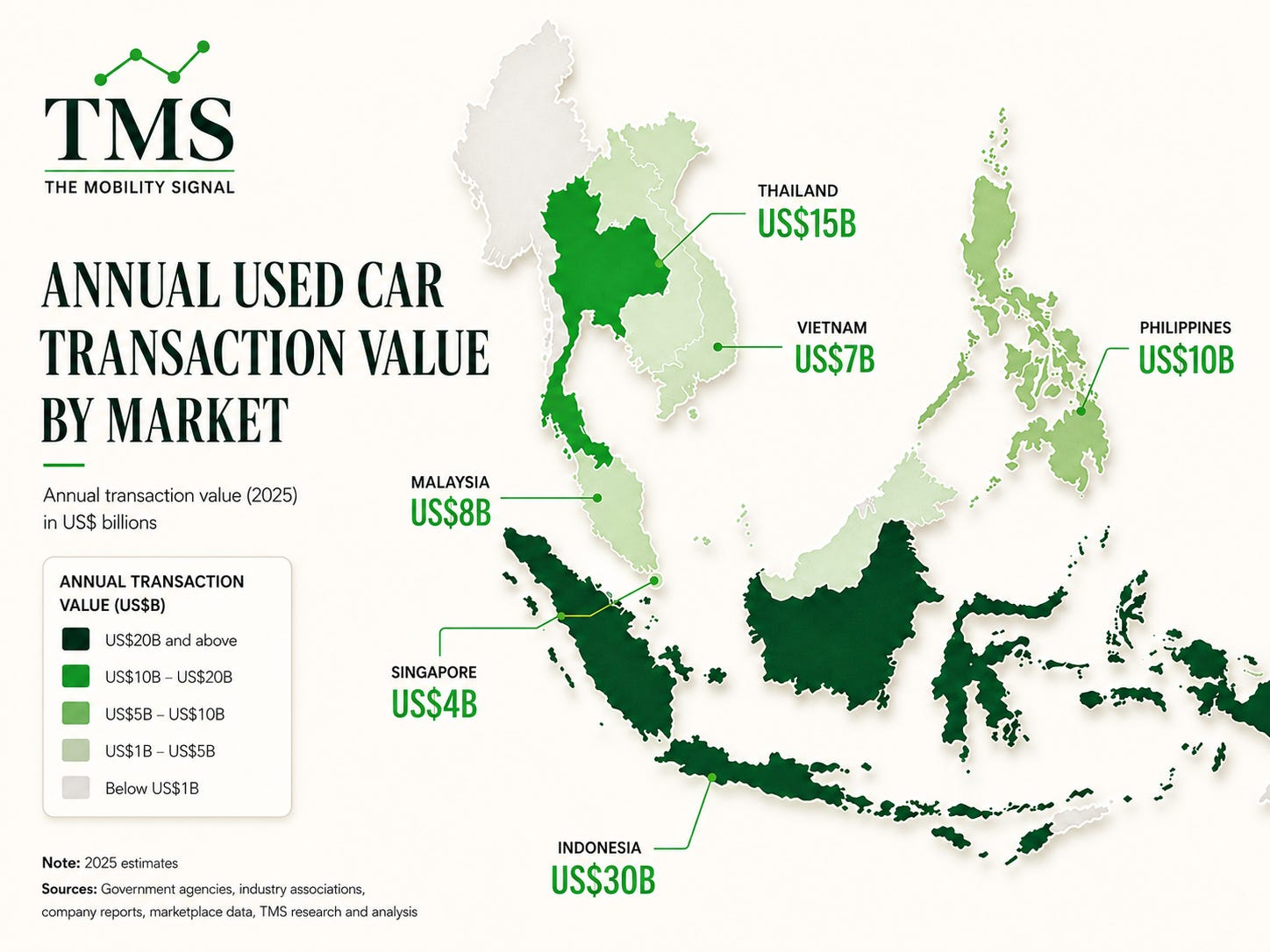
Figure 1. Estimated annual used car transaction value across Southeast Asia (2025).
Market Size ≠ Market Opportunity
Market size is the starting point for evaluating opportunity, but it is rarely the only consideration. A larger market does not automatically translate into a more attractive business environment, nor does it guarantee commercial success.
Across Southeast Asia, used car markets differ not only in transaction value but also in ecosystem maturity. Financing availability, insurance penetration, dealer organization, consumer trust, digital adoption and regulation all shape how accessible each market is.
Despite its relatively small used car market, Singapore's transparent regulatory framework, well-developed financial system and advanced digital infrastructure make it one of Southeast Asia's most accessible automotive markets.
By contrast, the Philippines combines substantial transaction value with far greater operational complexity. Fragmented dealerships, informal transactions and uneven digital adoption make the market significantly harder to navigate than its more mature regional peers.
Businesses should therefore evaluate opportunities through three complementary lenses:
Market Size — How much economic value exists?
Market Accessibility — How easy is it to participate and grow?
Business Capability — Which businesses have the operating model, capabilities and competitive advantages to succeed?
Throughout thi s report, these three dimensions provide a consistent framework for comparing Southeast Asia’s automotive markets, helping identify not only where the largest opportunities exist, but also which business models are best positioned to succeed.
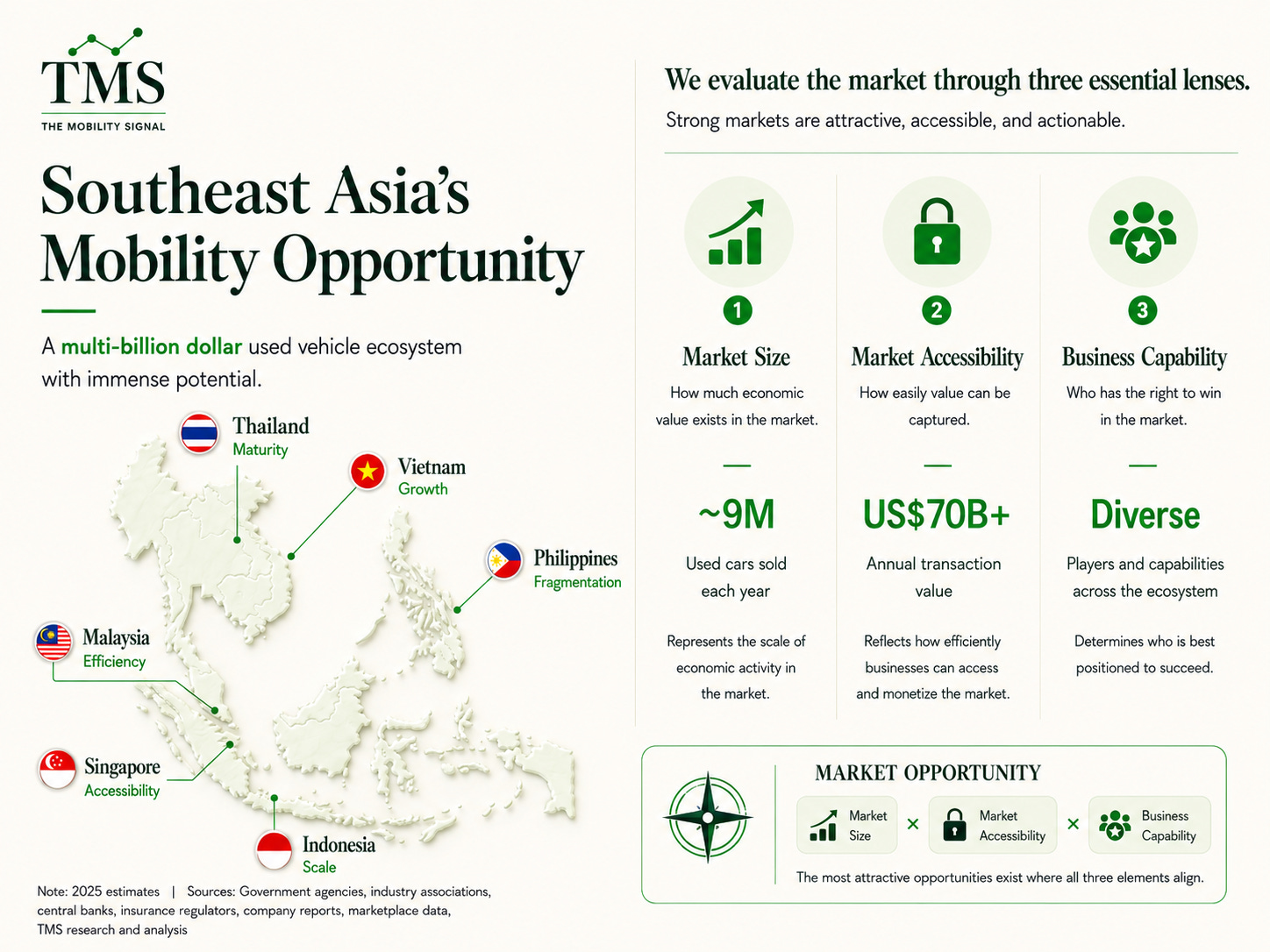
Figure 2. Evaluating Southeast Asia's used car markets requires more than measuring transaction value. The strongest opportunities emerge where market scale, accessibility and business capabilities align.
*Note: Formula represents a conceptual evaluation model rather than a calculated index.
TMS Insight 02
To understand market opportunity, you must first understand how value is created.
The TMS Market Opportunity Framework explains how opportunity should be evaluated. The next section explores why vehicles generate economic value throughout their lifetime, providing the context for comparing market opportunities across Southeast Asia.
The Lifetime Value of a Vehicle
The automotive industry has traditionally focused on a single event: the sale of a new vehicle. In reality, that sale marks only the beginning of a much longer economic lifecycle.
Over 15 to 20 years, a passenger vehicle may change ownership several times. Each transfer extends the vehicle’s economic lifecycle, generating far more than the exchange of the vehicle itself.
Every ownership transfer creates demand for financing, insurance, registration, inspections, maintenance and aftermarket services. Dealers earn revenue through vehicle sales and after-sales services, lenders originate new loans, insurers issue new policies, and digital marketplaces connect buyers and sellers. Together, these recurring activities create an automotive economy that often exceeds the value generated by the vehicle's original sale.
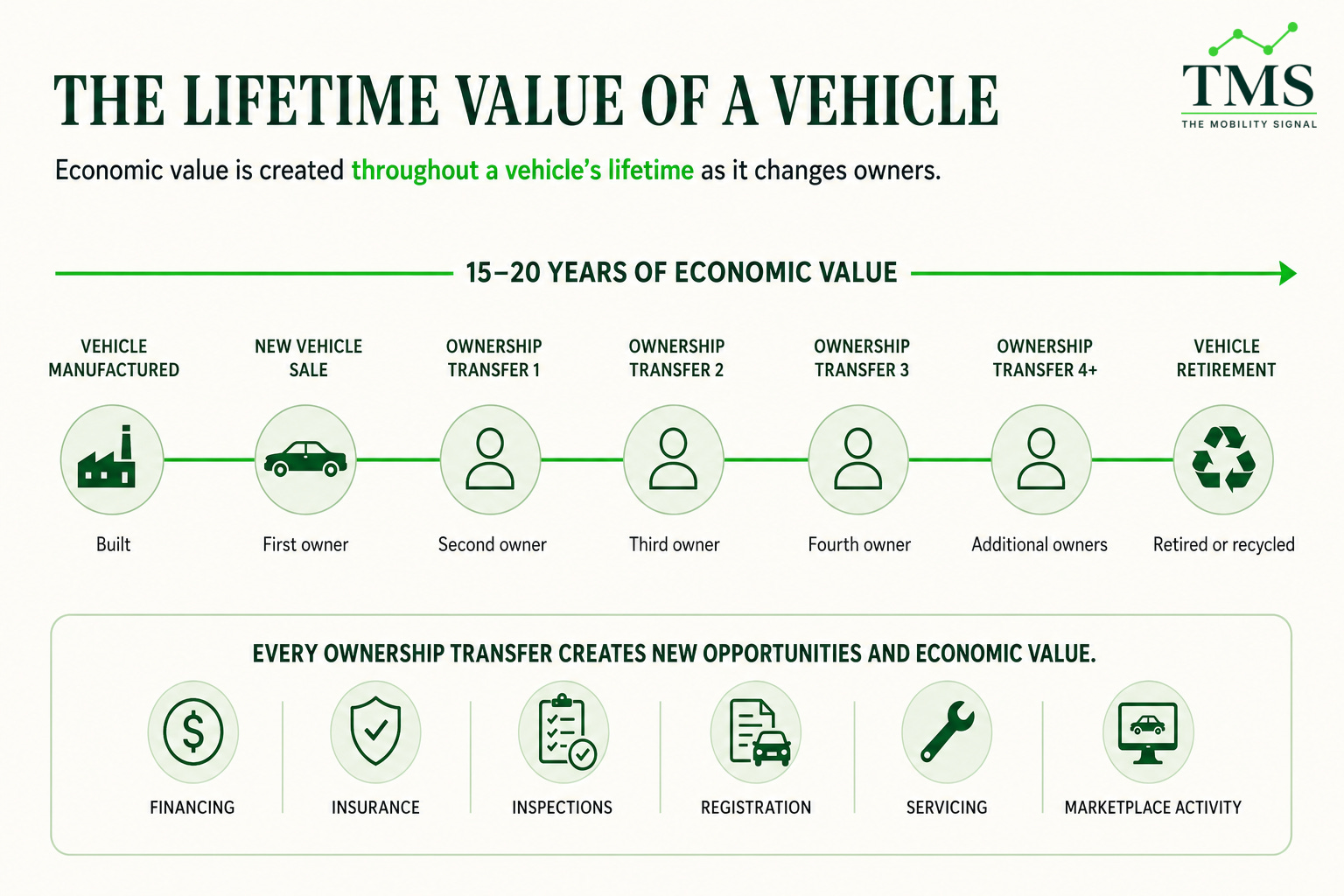
Figure 3. Every ownership transfer creates new opportunities for dealers, lenders, insurers, service providers and digital marketplaces.
For dealerships, lenders, insurers and digital marketplaces, the opportunity extends far beyond selling vehicles.
TMS Insight 03
The greatest value is created long after the first sale.
Viewing vehicles through this lens fundamentally changes how businesses evaluate opportunity within the automotive industry. Rather than treating a vehicle as a single transaction, it should be understood as a long-lived economic asset that generates recurring revenue opportunities across finance, insurance, servicing and technology. This lifetime value, not annual new vehicle sales alone, underpins Southeast Asia's estimated US$70 billion used car economy.
How Businesses Create Value Throughout the Ownership Lifecycle
Although every transaction begins with the sale of a vehicle, the economic value generated is shared across a broad network of participants. Dealers, lenders, insurers, marketplaces and service providers each capture recurring revenue at different stages of vehicle ownership, creating an automotive economy that extends far beyond the initial sale.
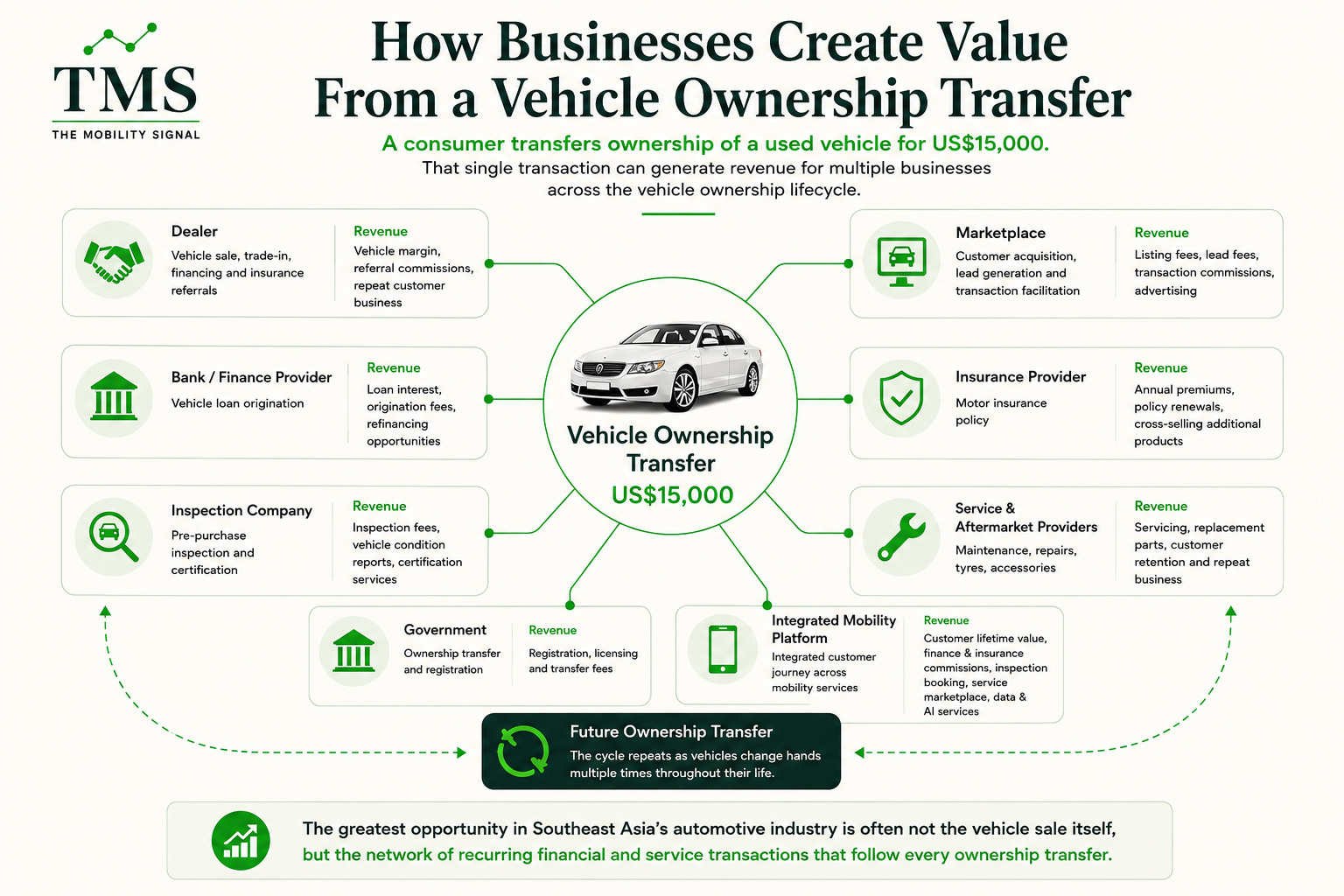
Figure 4. Every ownership transfer generates recurring revenue opportunities across automotive retail, finance, insurance, inspections, digital marketplaces and after-sales services, extending the vehicle's economic lifecycle.
As vehicles change hands throughout their lifetime, these revenue streams repeat with every ownership transfer. Rather than generating economic value only at the initial sale, a single vehicle supports recurring activity across finance, insurance, technology and mobility services for many years.
While every ownership transfer generates recurring economic activity, the ability to capture that value varies significantly across Southeast Asia. Market structure ultimately determines how effectively businesses can capture those recurring revenue opportunities. Having established both how opportunity is evaluated and how value is created, the report now compares Southeast Asia's largest automotive markets through the TMS Market Opportunity Framework.
Comparing Southeast Asia's Used Car Market Opportunities
Southeast Asia’s used car economy is not a single market, but a collection of distinct automotive markets. While every country benefits from rising vehicle ownership, increasing incomes and growing demand for affordable mobility, the structure, maturity and accessibility of each market differ significantly.
Applying this framework reveals that each market creates opportunity in different ways. Indonesia rewards operational excellence at scale; Thailand benefits from ecosystem maturity; Malaysia from operational efficiency; the Philippines from customer orchestration; Vietnam from long-term market development; and Singapore from accessibility and innovation.
This comparison reinforces a central theme of the report: market size alone does not determine opportunity. The strongest opportunities emerge where market characteristics align with business capabilities, enabling businesses to compete successfully within local markets.
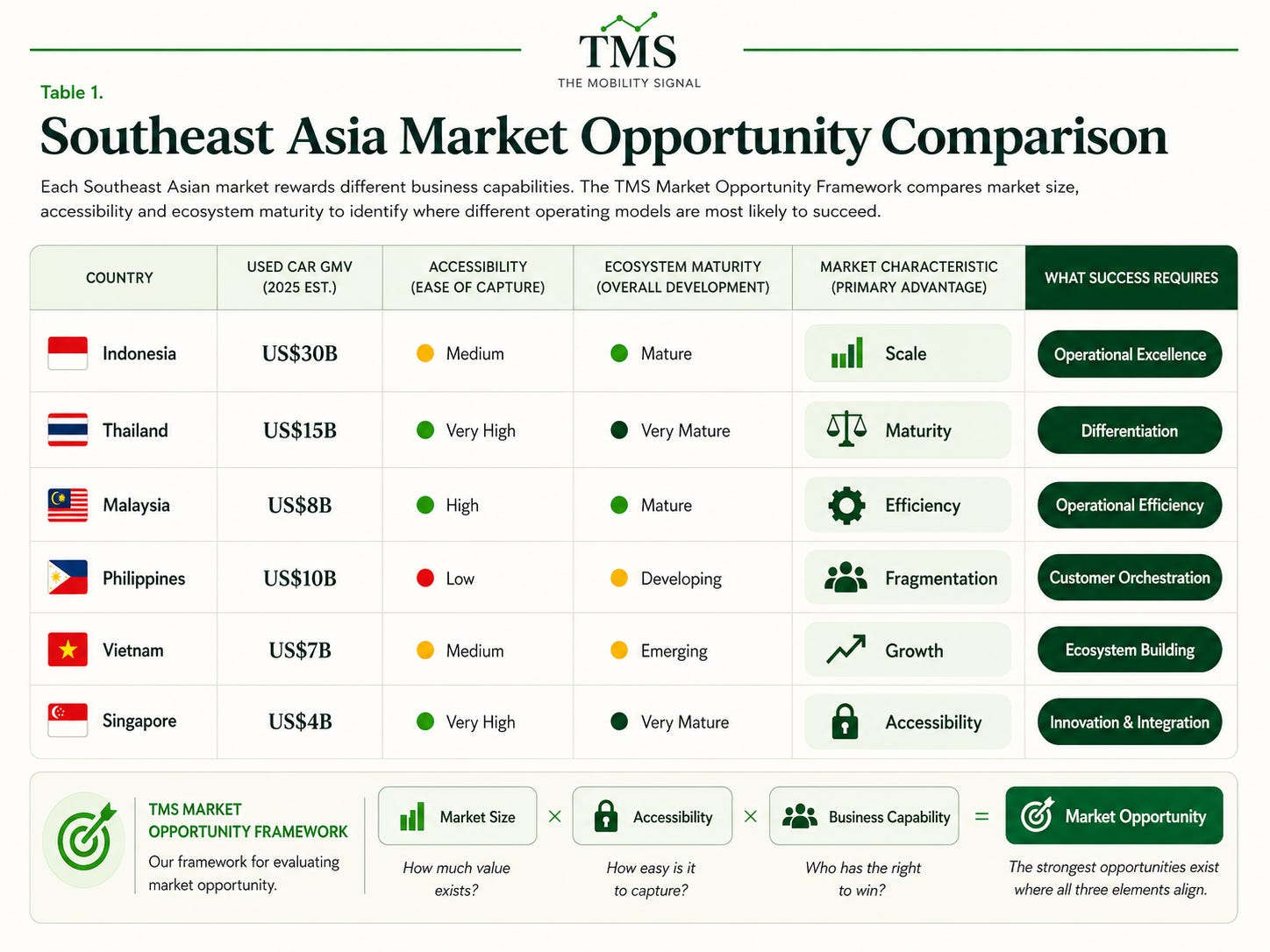
Table 1. Comparison of Southeast Asia’s six largest used car markets across economic scale, accessibility, ecosystem maturity and the capabilities required to succeed.
TMS Insight 04
Market structure determines where competitive advantage is created.
The following country profiles apply the TMS Market Opportunity Framework across Southeast Asia’s six largest automotive markets, showing how different market structures reward different capabilities and shape distinct paths to success.
Southeast Asia Country Profiles
Each country profile applies the TMS Market Opportunity Framework to evaluate how market structure shapes long-term opportunity. Rather than evaluating markets on transaction value alone, the analysis considers three complementary dimensions introduced earlier in this report: Market Size, Market Accessibility and Business Capability. Together, these dimensions provide a consistent basis for understanding why markets reward different business models and operating strategies.
Although Southeast Asia’s used car economy exceeds US$70 billion annually, it is not a single homogeneous market. Each has evolved under different regulatory environments, financing systems, digital ecosystems and consumer behaviors, creating distinct competitive dynamics and pathways to growth.
Together, these profiles show that Southeast Asia is best understood not as a single automotive market, but as six distinct market archetypes, each rewarding different business capabilities and competitive strategies.
Indonesia: The Region’s Largest Used Car Economy
Indonesia is Southeast Asia's largest used car economy, generating approximately US$30 billion in annual transactions and representing the region's largest commercial opportunity. Its defining characteristic, however, is not simply scale, it is the operational complexity required to capture that opportunity.
Rising demand for affordable personal mobility and improving household purchasing power have supported steady market expansion since 2019. Used vehicles remain significantly less expensive than new cars, making them the preferred choice for many Indonesian households. As financing has become more accessible, transaction volumes have continued to increase across both organized dealerships and independent sellers.
Operating at Indonesia's scale requires businesses to manage thousands of independent dealers, distribution across more than 17,000 islands and inconsistent vehicle quality standards, making inventory sourcing and maintaining consistent standards more complex. Businesses that combine trusted local partnerships with nationwide operational infrastructure are therefore better positioned to succeed than purely digital competitors.
Indonesia's scale also provides significant opportunities for lenders, insurers and digital marketplaces. A well-developed financial ecosystem allows financing and insurance to become a natural part of the purchasing process, improving affordability while generating recurring revenue for lenders, insurers and marketplaces.
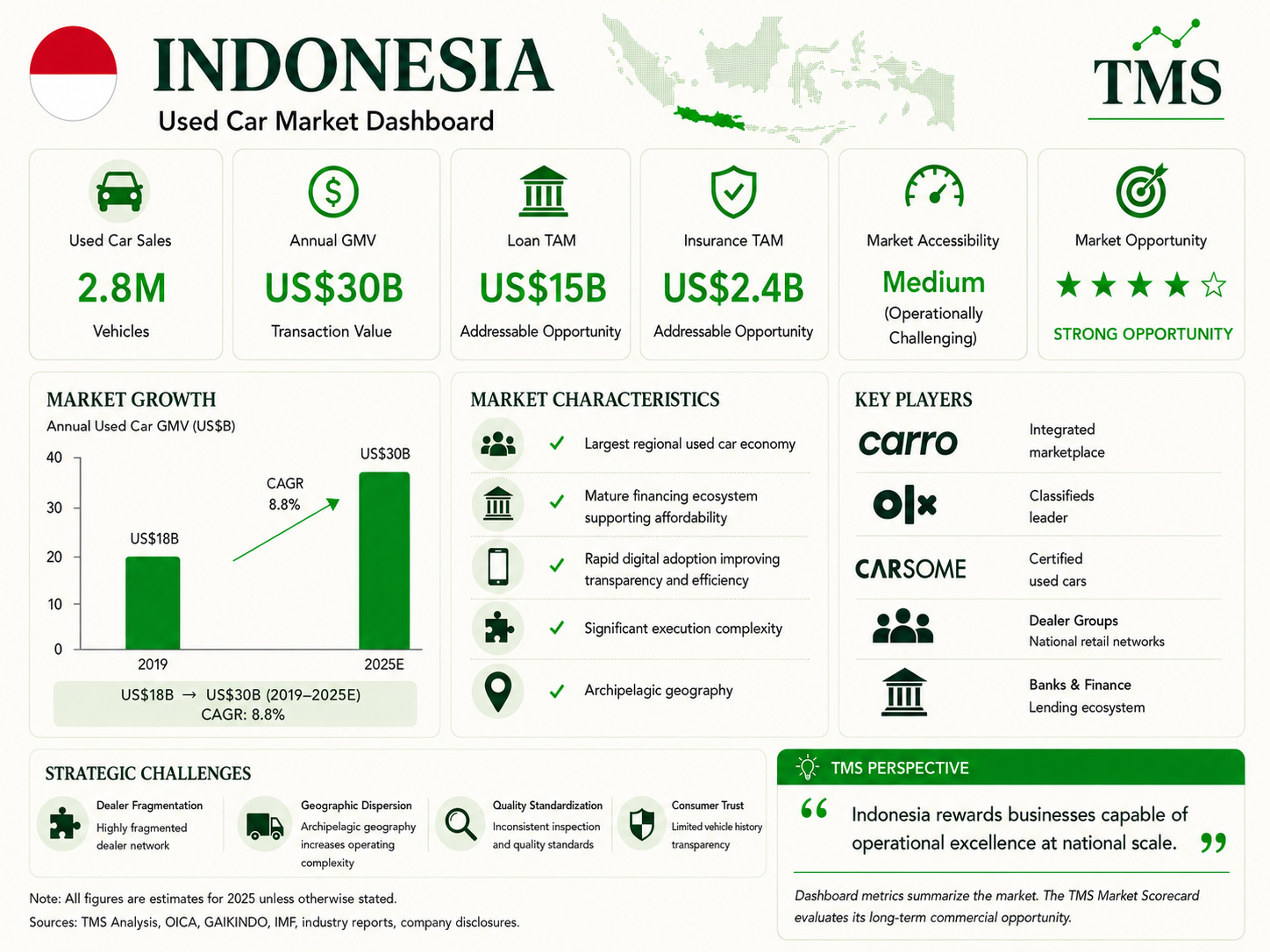
Figure 5. Indonesia's dashboard summarizes the market's scale, growth, accessibility and ecosystem characteristics, providing the factual foundation for the TMS Market Scorecard.
Digital Mobility Ecosystem
Regional platforms including Carro, Carsome and OLX Autos have helped transform Indonesia's used car market through investments in inspection networks, financing partnerships and dealer technology. As these capabilities become more widely adopted, transactions are becoming faster, more transparent and increasingly data-driven.
Rather than simply connecting buyers and sellers, leading platforms are evolving into customer journey orchestrators. By bringing together inventory sourcing, inspections, financing and logistics, they simplify transactions while creating value throughout the ownership lifecycle.
As Indonesia’s scale increases operational complexity, competitive advantage depends less on acquiring inventory than on orchestrating the broader automotive ecosystem. Success requires coordinating dealer networks, maintaining consistent operating standards and delivering reliable, high-quality transactions at national scale. Businesses that execute consistently across this complex operating environment will be best positioned to succeed.
TMS Insight 05
Scale creates opportunity. Operational excellence captures it.
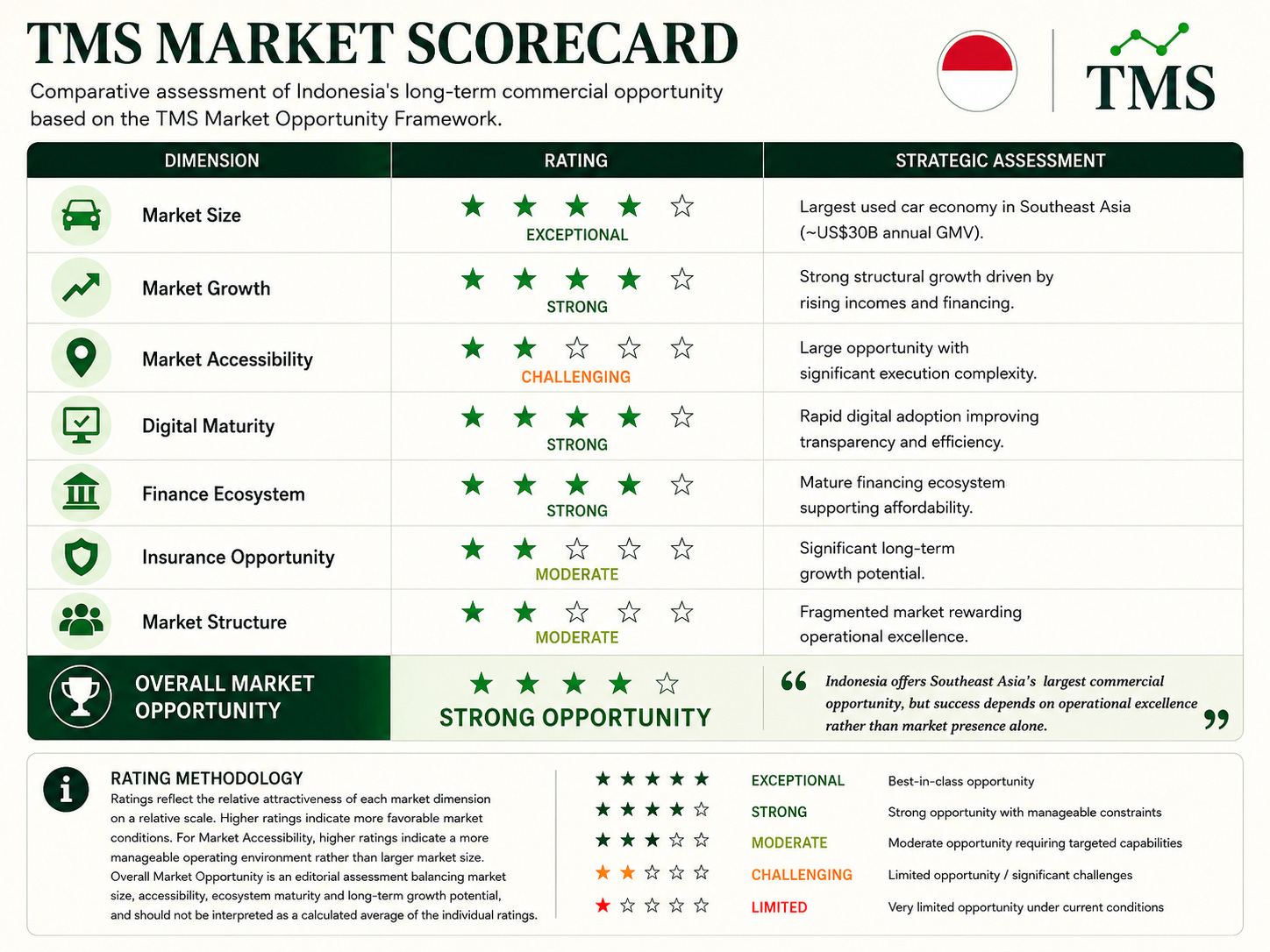
Indonesia's opportunity is defined by scale, but competitive advantage is earned through operational excellence. Businesses that combine trusted local partnerships, disciplined execution and nationwide operating capability will be best positioned to capture Southeast Asia's largest used car opportunity.
Thailand: Southeast Asia’s Most Mature Used Car Ecosystem
Thailand combines substantial market scale with Southeast Asia's most mature automotive ecosystem, creating one of the region's most attractive long-term commercial opportunities. An established automotive industry, sophisticated dealer networks and a well-developed financial system have produced one of Southeast Asia’s most efficient and trusted secondary vehicle markets. With approximately US$15 billion in annual transaction value, Thailand offers one of the region’s most attractive operating environments across the automotive value chain.
Steady growth since 2019 has been supported by stable economic conditions, a large vehicle fleet and a well-established replacement cycle. Used vehicles remain an attractive alternative to new cars, while widespread financing supports demand across both franchised dealerships and independent retailers. Compared with many neighbouring markets, Thailand’s organized dealer sector and consumers’ familiarity with formal used vehicle transactions reduce friction throughout the ownership journey.
Decades of collaboration between dealers, lenders, insurers and vehicle marketplaces have made financing, insurance and after-sales services a natural part of the purchasing process. The result is a transparent, trusted and professionally managed used car market.
This level of coordination creates attractive long-term economics for businesses across the industry. Recurring revenue from financing, insurance and after-sales services creates attractive long-term economics across the automotive value chain.
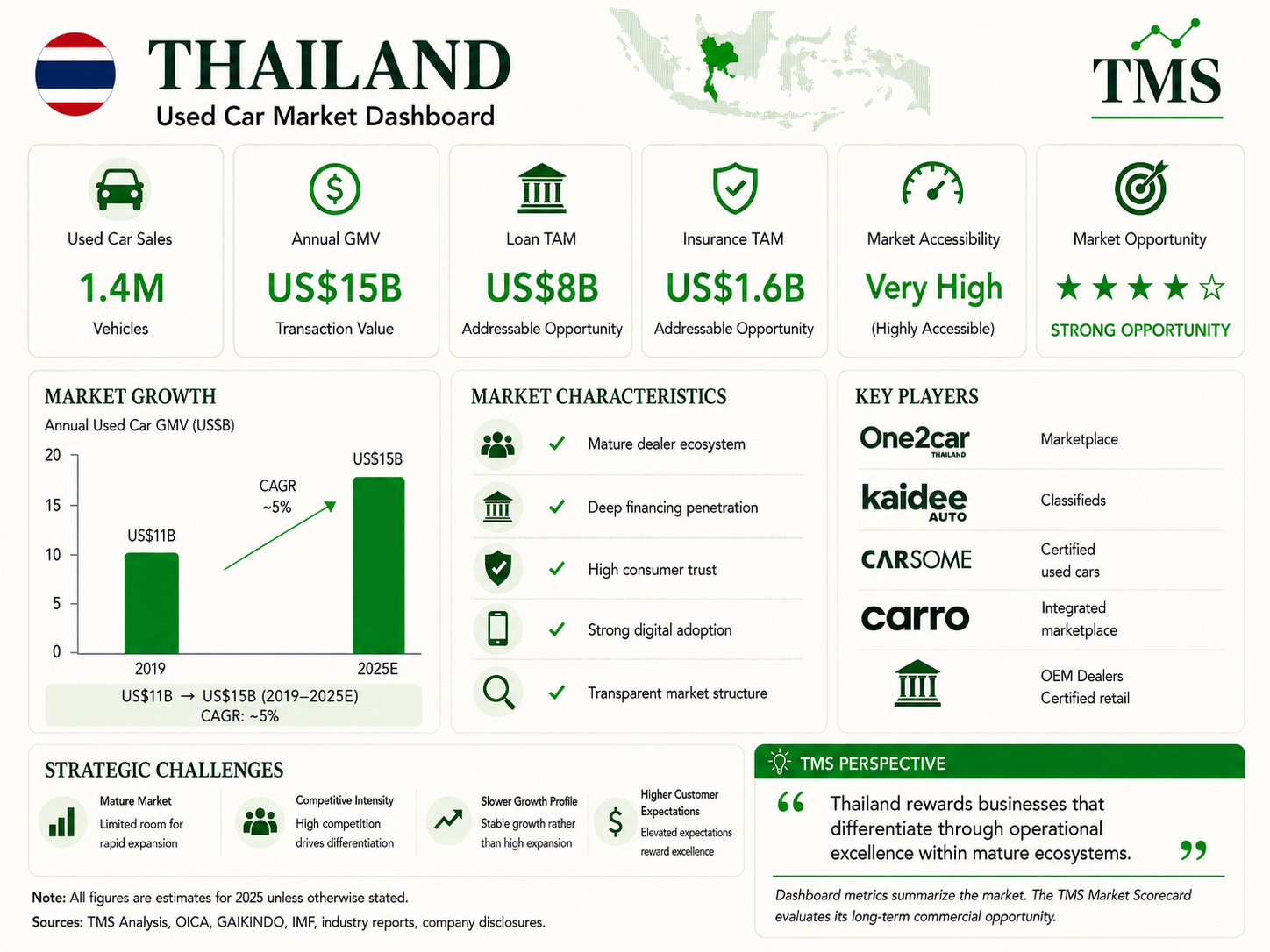
Figure 6. Thailand's dashboard summarizes the market's size, accessibility and ecosystem maturity, highlighting why it represents one of Southeast Asia's strongest long-term commercial opportunities.
Digital Mobility Ecosystem
Digital channels have evolved alongside Thailand’s established automotive ecosystem. Leading platforms such as One2Car and Kaidee Auto have built large online audiences, while regional operators including Carsome and Carro continue expanding through certified vehicle programs and digital retail capabilities. OEM-certified used vehicle programs have become an important differentiator, providing consumers with greater transparency, higher quality standards and increased purchasing confidence.
Rather than replacing traditional dealerships, digital platforms have become a natural extension of Thailand’s automotive retail network. Consumers begin their vehicle search online before completing their purchase through established dealer networks. This combination of digital channels and physical infrastructure has strengthened customer confidence while preserving the trust that underpins high-value automotive transactions.
Thailand's mature automotive ecosystem shifts competition away from building infrastructure and toward delivering better service, stronger customer relationships and greater operational efficiency. Businesses differentiate themselves by combining digital capabilities with established dealer networks, financing and after-sales services rather than expanding inventory or physical footprints.
TMS Insight 06
Mature markets reward differentiation rather than expansion.
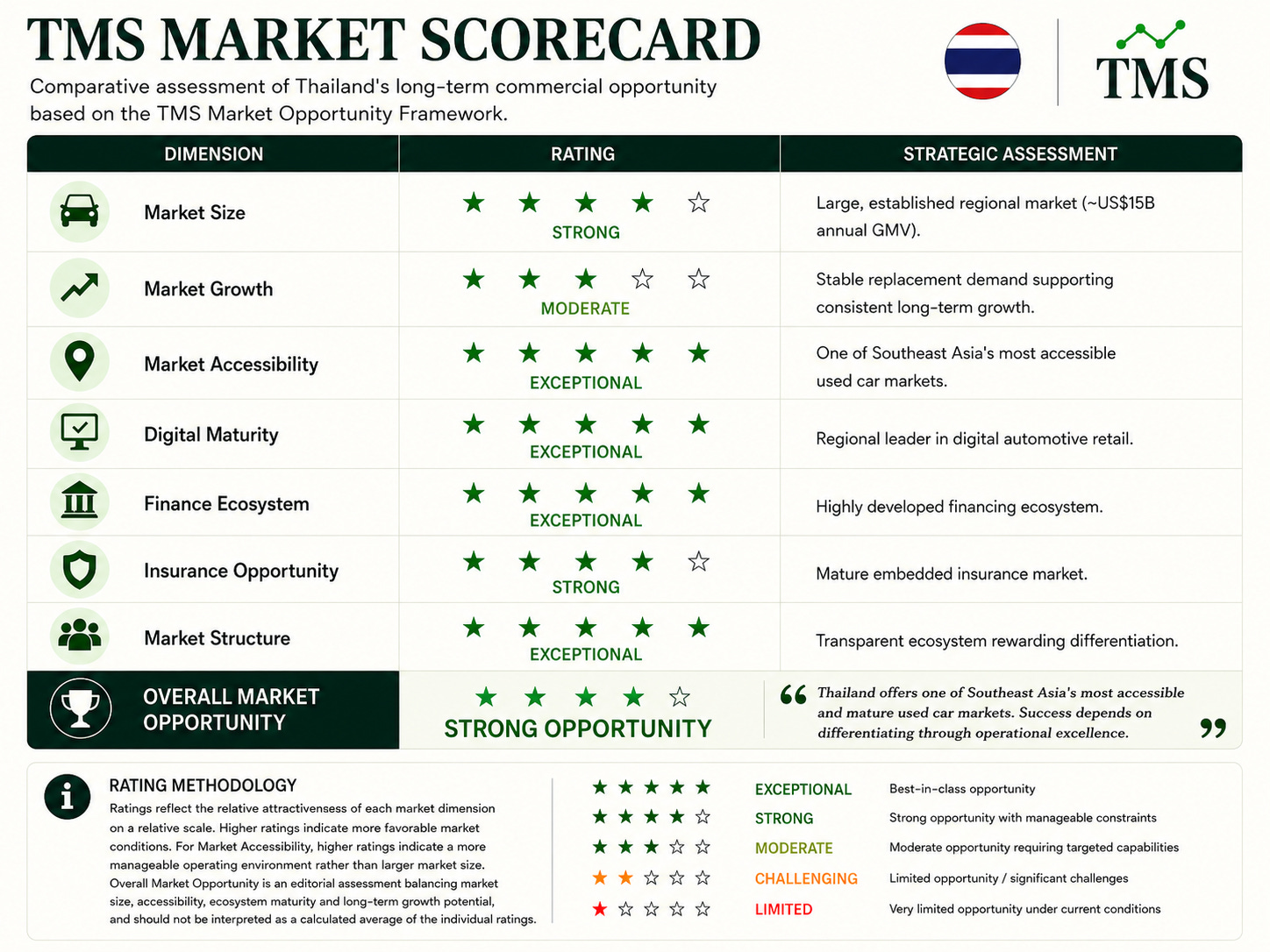
As markets mature, competition shifts from building infrastructure to delivering better service, stronger customer relationships and greater convenience. Thailand's transparent market structure, well-developed financial system and high consumer trust reduce execution risk while raising customer expectations. Businesses that distinguish themselves through superior service, trusted customer relationships and innovation will stand out in an already competitive market. In Thailand, mature infrastructure creates the opportunity, but differentiation determines who succeeds.
Malaysia: Southeast Asia’s Most Efficient Used Car Market
Although smaller than Indonesia or Thailand, Malaysia has developed one of Southeast Asia’s most efficient automotive ecosystems. Strong household vehicle ownership, well-developed institutions and widespread digital adoption have produced a highly organized used car market that consistently outperforms many larger regional peers. With approximately US$8 billion in annual transaction value, Malaysia offers an attractive environment for businesses seeking predictable growth and scalable operating models.
Steady growth since 2019 has been supported by stable economic conditions, high vehicle ownership and a well-established replacement cycle. Used vehicles provide an affordable alternative to new cars, while widespread financing, transparent pricing and an organized dealer network enable efficient transactions. Compared with many neighbouring markets, lower fragmentation and greater market formalization reduce friction while allowing businesses to scale more effectively.
Domestic vehicle manufacturing through Proton and Perodua, alongside international brands with established dealer networks, has created a highly efficient dealer and service network supported by nationwide service centres and strong parts availability. Together, these strengths improve consumer confidence while making vehicle sales, financing and after-sales support more efficient.
Well-developed financing, trusted institutions and nationwide dealer networks create a predictable operating environment where businesses can focus on improving operational efficiency and service quality rather than overcoming structural market constraints.
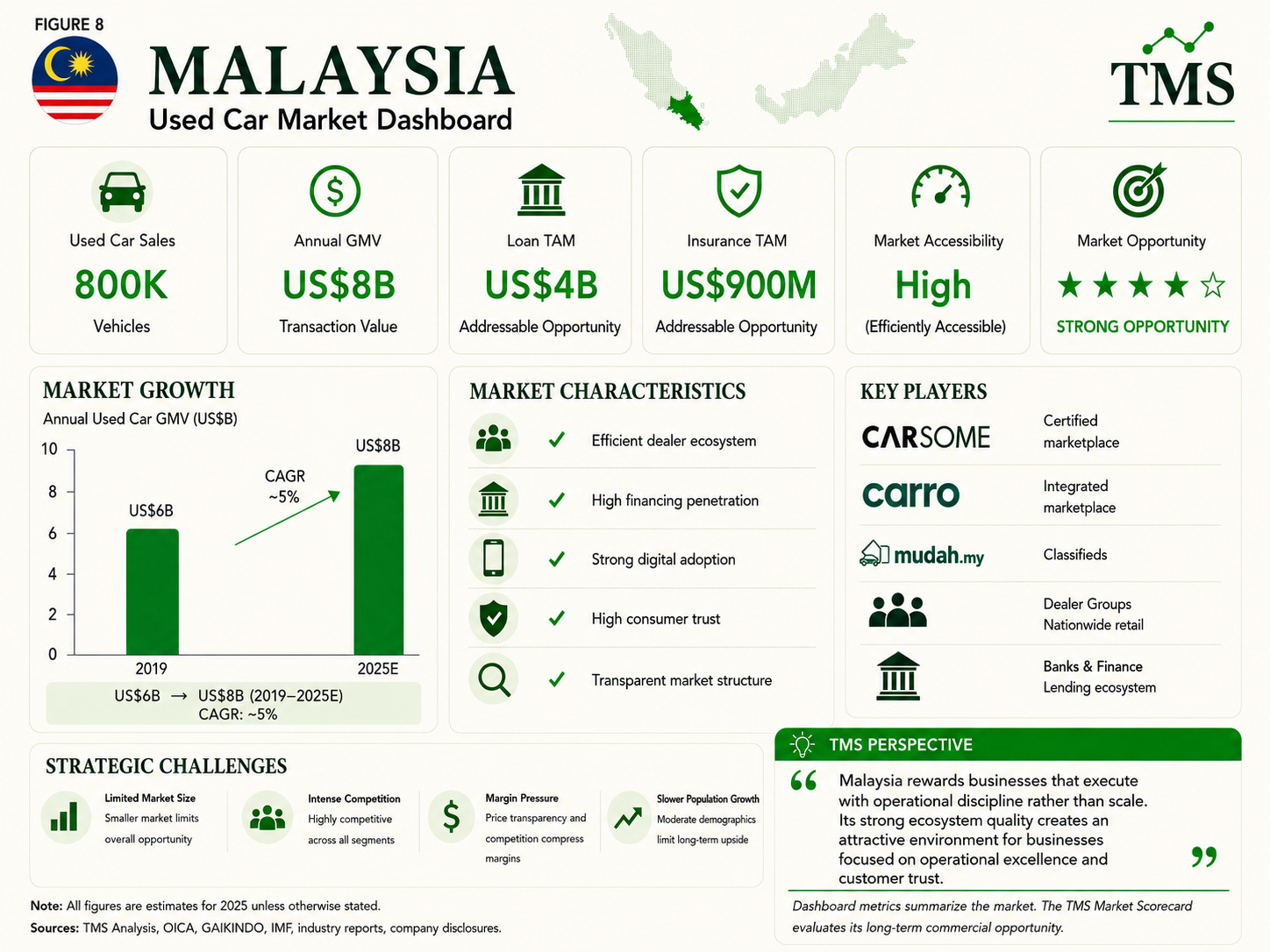
Figure 8. Malaysia's dashboard highlights the operational efficiency, digital maturity and ecosystem characteristics that make it one of Southeast Asia's most efficient used car markets.
Digital Mobility Ecosystem
Malaysia is one of Southeast Asia’s most digitally mature automotive markets. Regional platforms including Carsome and Carro have established significant operations, while local marketplace Mudah.my remains a leading destination for used vehicle buyers and sellers. Consumers are increasingly comfortable researching, financing and purchasing vehicles online, supported by trusted digital infrastructure and professional market participants.
Rather than disrupting traditional dealer networks, digital platforms have strengthened an already efficient automotive ecosystem. Digital capabilities, financing and insurance reduce transaction friction, improve transparency and reinforce consumer confidence throughout the purchasing process.
Because the underlying ecosystem is already highly organized, competitive advantage depends less on expanding infrastructure than on improving operational performance. Businesses compete by optimizing customer acquisition, streamlining operations and delivering faster, more efficient transactions. In Malaysia, the greatest value is created by businesses that optimize an already efficient ecosystem rather than reinvent it.
TMS Insight 07
Efficient markets reward operational discipline, not scale.
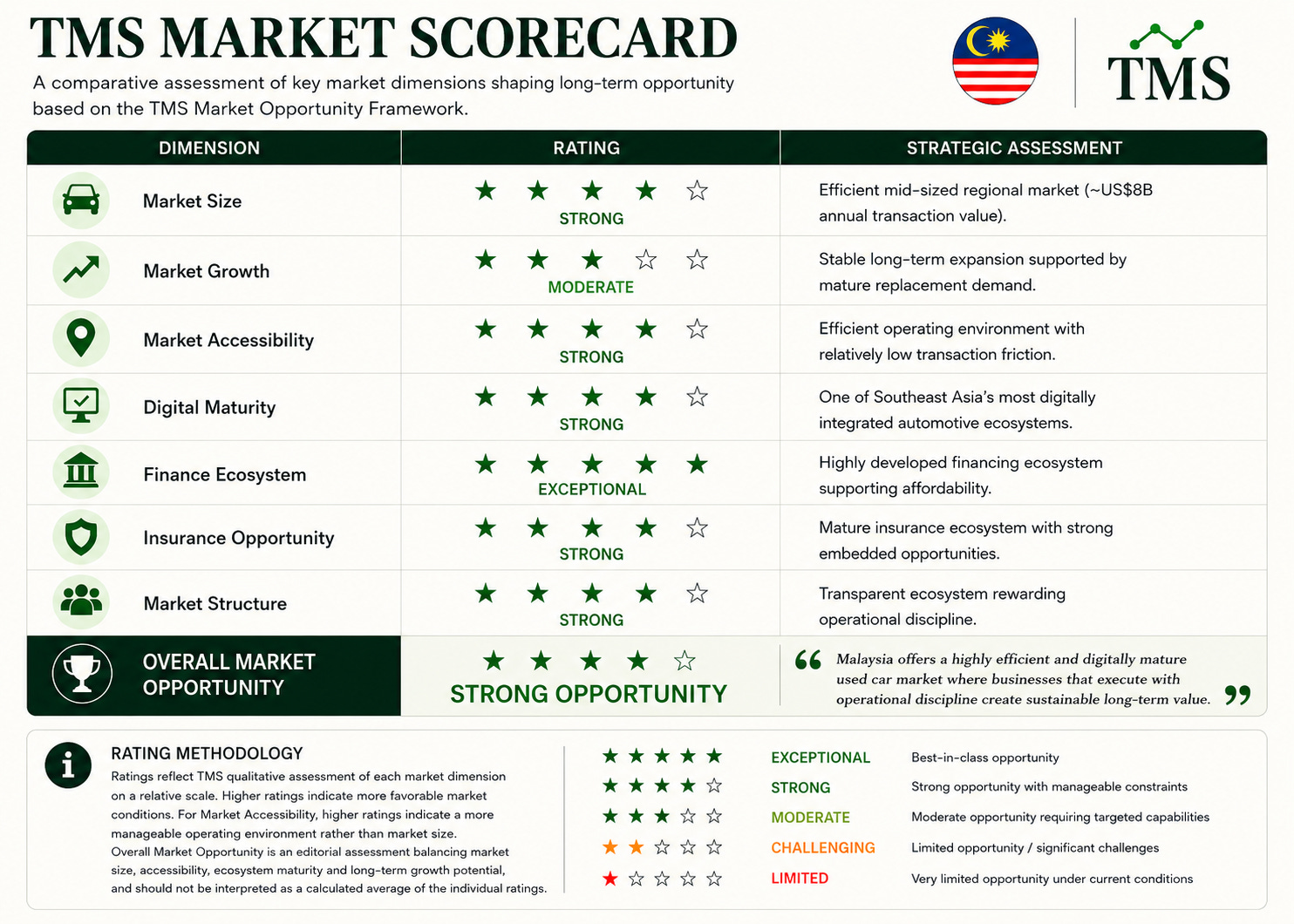
Malaysia demonstrates that ecosystem quality can compensate for market size. Although smaller than Indonesia or Thailand, its efficient institutions, transparent market structure and digital maturity create an environment where operational discipline becomes a competitive advantage. Businesses that execute consistently can generate attractive long-term returns despite operating in a smaller market.
For investors and operators, Malaysia illustrates that ecosystem quality can be just as valuable as market scale. A mature, transparent and digitally connected market provides favorable conditions for sustainable long-term growth across the automotive value chain.
The next profile examines the Philippines, where success depends less on ecosystem efficiency and more on overcoming market fragmentation and execution complexity. While Malaysia rewards operational discipline within an efficient market, the Philippines presents a very different path to creating competitive advantage.
Philippines: A Large but Fragmented Used Car Opportunity
The Philippines combines one of Southeast Asia's largest used car opportunities with one of its most fragmented automotive ecosystems. While approximately US$10 billion in annual transaction value creates substantial commercial potential, success depends less on scale than on the ability to coordinate fragmented dealers, build trusted local relationships and simplify an increasingly complex customer journey.
Rising vehicle ownership and improving household incomes continue to support demand, yet the used car industry remains dominated by thousands of small and medium-sized independent dealers. Many sell only three to five vehicles each month, while even the country’s largest family-owned businesses typically sell only a few hundred vehicles. Unlike Thailand or Malaysia, large used car supermarket models and institutionally backed dealer groups have yet to emerge at meaningful scale.
Because these independent dealers remain the backbone of the industry, trust, reputation and long-standing customer relationships continue to shape purchasing decisions. Although this decentralized structure increases operational complexity, it also creates opportunities for businesses that can organize supply, improve transparency and simplify the customer journey.
The fragmented nature of the market also creates opportunities to integrate services that many independent dealers cannot efficiently provide on their own. Many dealers lack the scale, lender relationships and technology needed to deliver a seamless customer experience, creating opportunities for digital platforms to connect consumers with a broader network of services while strengthening customer relationships throughout the ownership lifecycle.
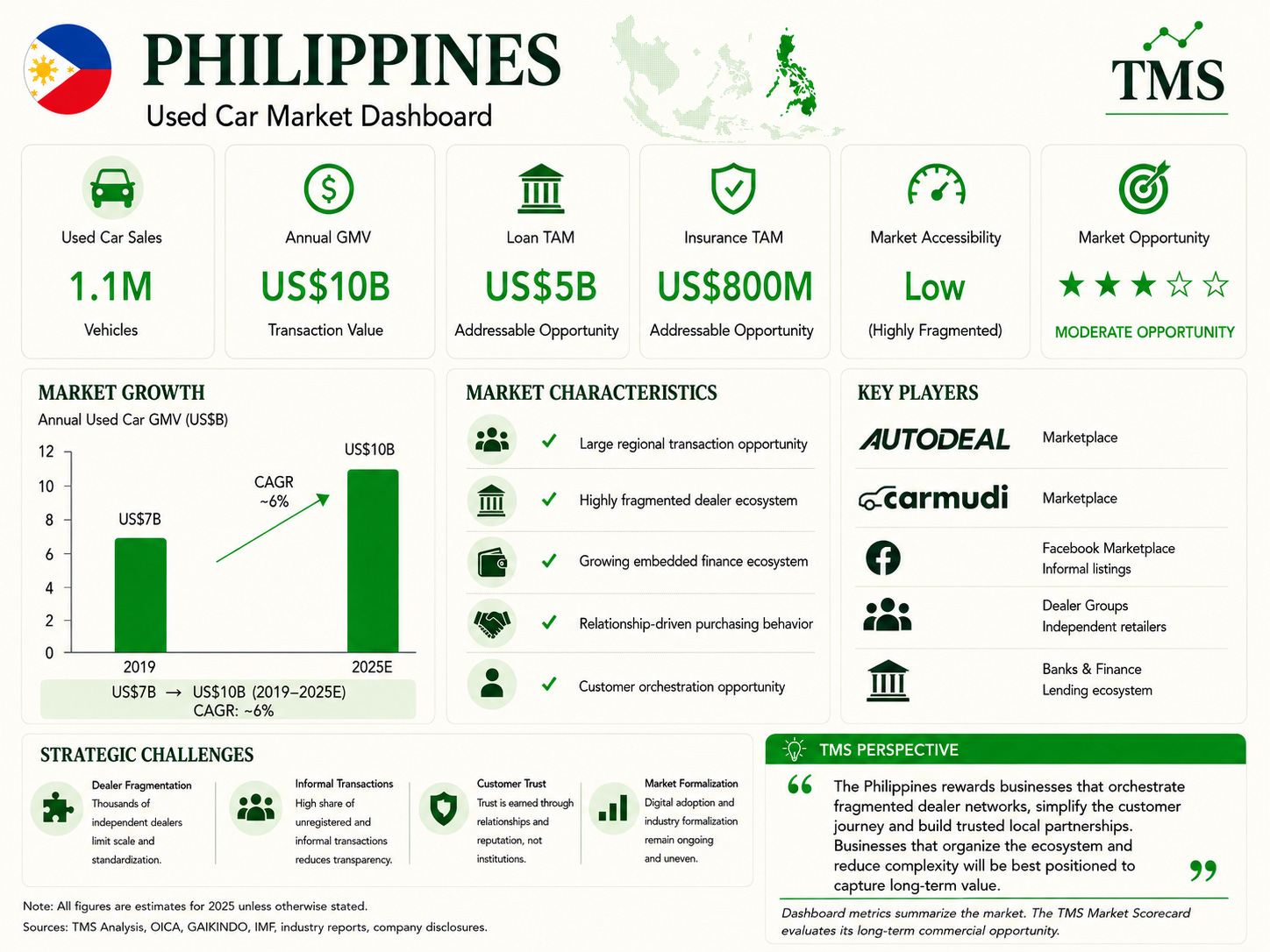
Figure 10. The Philippines' dashboard highlights the scale, fragmentation and ecosystem characteristics that define one of Southeast Asia's most structurally complex used car markets.
Digital Mobility Ecosystem
The Philippine digital automotive ecosystem reflects the fragmented nature of the broader market. Despite multiple attempts by local and regional operators, no single platform has achieved the nationwide scale seen in Indonesia, Thailand or Malaysia. Business models that have succeeded elsewhere in Southeast Asia have proven more difficult to replicate, reflecting the importance of trusted dealer relationships, dispersed inventory and consumer confidence.
Because most used car businesses remain relatively small, with simple operating models and limited technology budgets, digital adoption has progressed more slowly than in neighbouring markets. Inventory is often managed through manual processes and consumer platforms rather than integrated dealership technology.
Instead of relying on dealer subscriptions or listing fees, platforms that aggregate demand and monetize completed transactions are better suited to the Philippine market because they align with its underlying structure. Dealers continue to own inventory and complete vehicle sales, while platforms focus on orchestrating the customer journey and creating value across the ownership lifecycle.
This brokerage model lowers barriers to dealer participation while shifting platform economics from advertising toward ownership services.
With dealers continuing to own inventory, competitive advantage shifts from asset ownership to customer orchestration. Success depends on coordinating dealer relationships, maintaining marketplace trust and delivering a seamless ownership experience. In the Philippines, businesses that create the greatest long-term value are those that orchestrate the customer journey rather than control vehicle inventory.
TMS Insight 08
Fragmented markets reward customer orchestration.
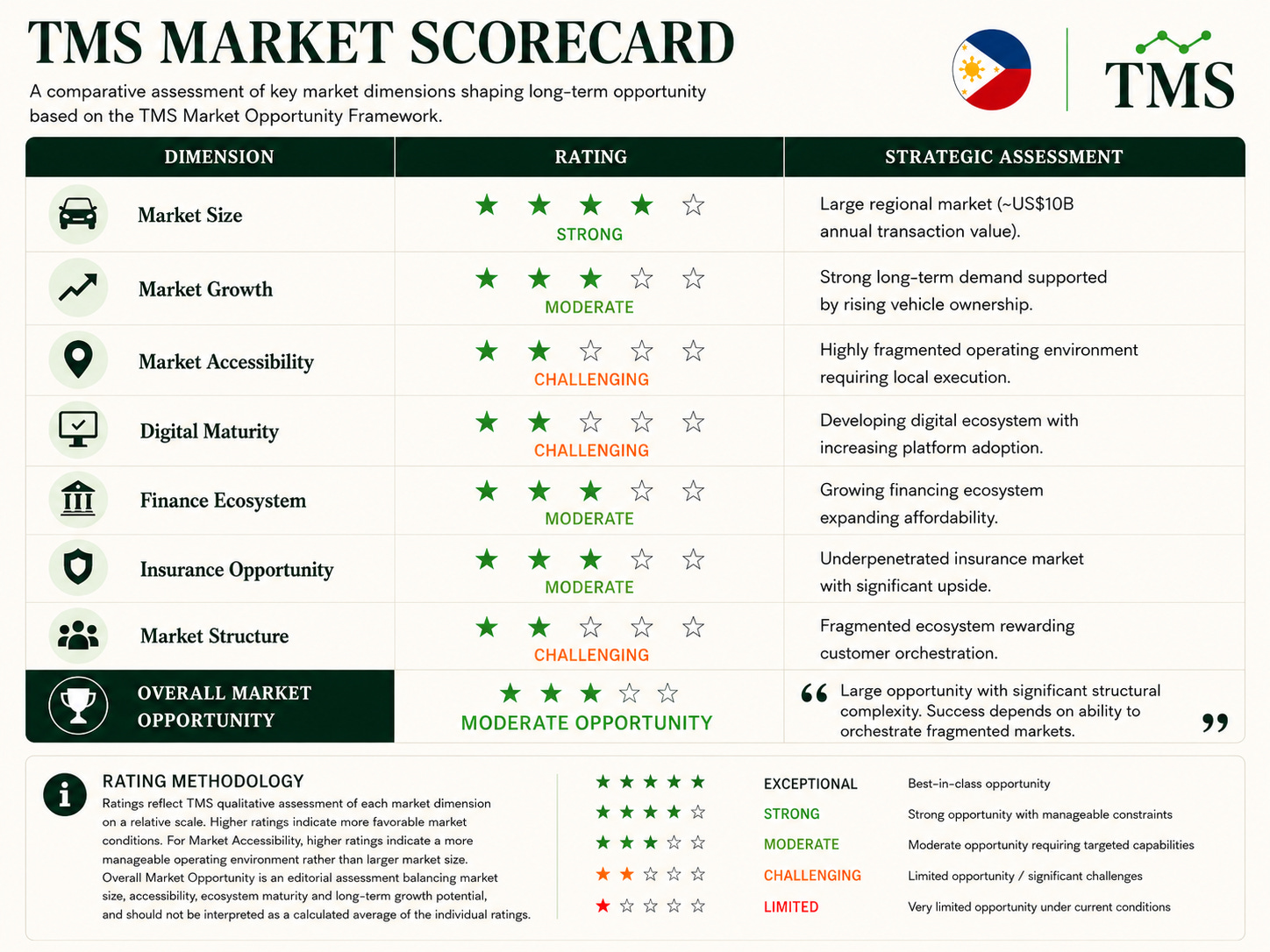
The Philippines shows that market opportunity alone does not create competitive advantage. Despite its scale, fragmented dealer networks, uneven digital adoption and localized consumer trust make execution significantly more complex than in neighboring markets. Businesses that successfully orchestrate dealers, financing, inspections and customer services will be best positioned to capture long-term value.
In the Philippines, customer orchestration creates the competitive advantage.
Vietnam: Southeast Asia’s Fastest-Growing Used Car Opportunity
Vietnam represents Southeast Asia's strongest long-term ecosystem development opportunity. Although its estimated annual used car transaction value of approximately US$7 billion remains smaller than Indonesia or Thailand today, rapid income growth, rising vehicle ownership and expanding financial infrastructure create one of the region's most compelling long-term commercial opportunities.
The used car market has expanded rapidly since 2019 as private vehicle ownership becomes increasingly accessible to Vietnam’s emerging middle class. Used vehicles remain an affordable entry point for first-time buyers, supporting continued market expansion. Unlike Thailand and Malaysia, which developed their automotive ecosystems over decades, Vietnam is entering a phase where vehicle ownership, financing, insurance and dealer networks are developing simultaneously, allowing businesses to shape the market from the outset.
As market institutions mature and consumer confidence strengthens, Vietnam’s automotive ecosystem continues to evolve. These structural improvements are creating favorable conditions for digital automotive platforms and new finance, insurance and after-sales services.
As first-time vehicle ownership accelerates, Vietnam is creating one of Southeast Asia's largest opportunities to embed financing, insurance and related services into the purchasing process. A growing population of first-time buyers allows businesses to shape customer expectations before long-established purchasing habits become entrenched, creating long-term customer relationships.
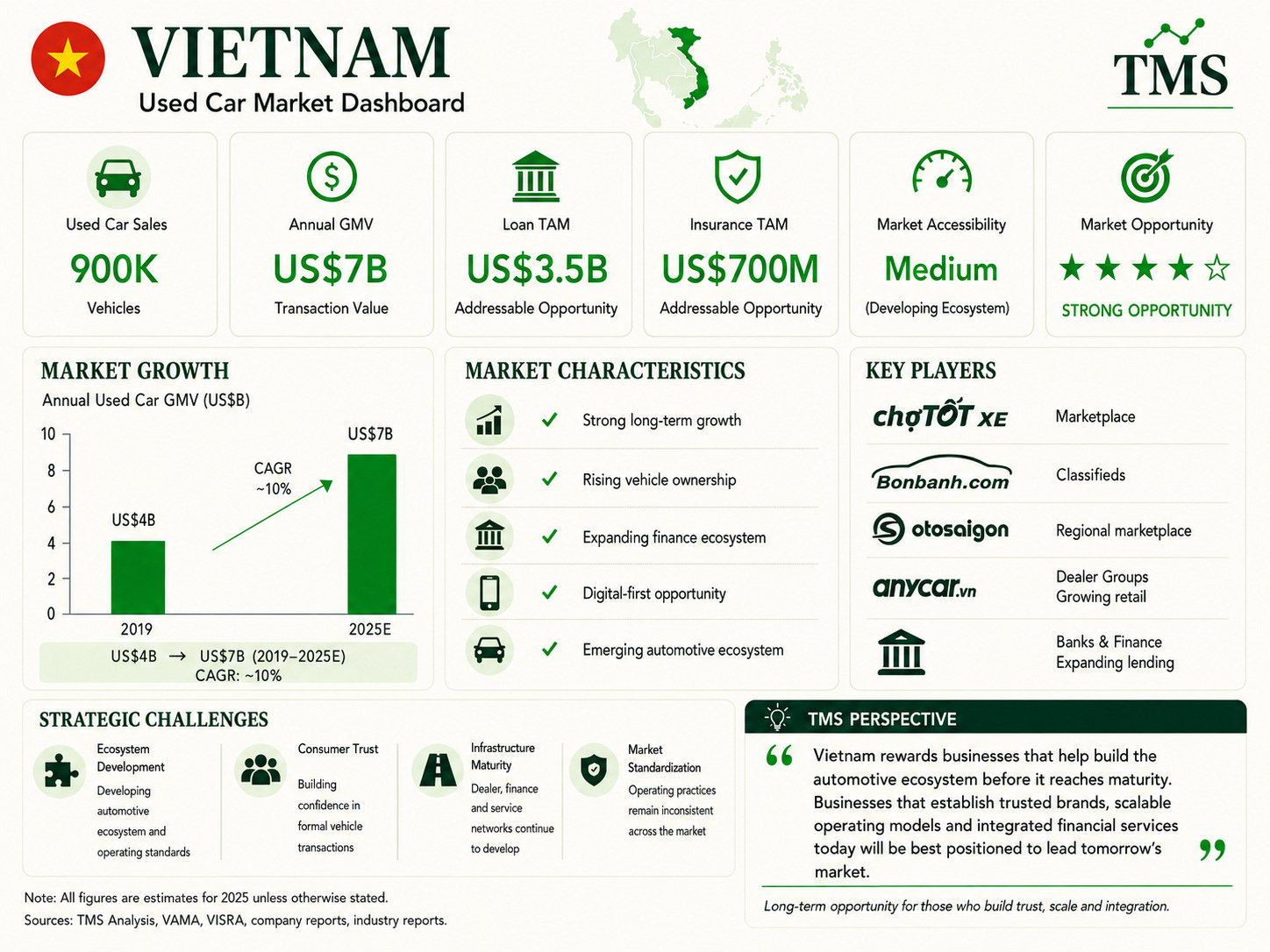
Figure 12. Vietnam's dashboard highlights the ecosystem characteristics and long-term growth drivers that position it as one of Southeast Asia's most compelling automotive opportunities.
Digital Mobility Ecosystem
Vietnam’s digital automotive ecosystem is maturing alongside the country’s broader automotive market. Regional platforms such as Carro and Carsome have expanded into the market, while domestic marketplaces including Chợ Tốt Xe and Bonbanh have become important destinations for buyers and sellers. Consumers are completing more of the ownership journey online as dealerships and other ecosystem participants continue to modernize.
Because much of the automotive value chain is evolving simultaneously rather than being layered onto an established market, businesses have an opportunity to design connected purchasing experiences
At this stage of market development, competitive advantage depends less on optimizing existing infrastructure than on helping build it. Businesses that establish trusted brands, scalable operating models and end-to-end purchasing experiences today will be well positioned to influence the industry’s future direction.
TMS Insight 09
Ecosystem builders become tomorrow's market leaders.
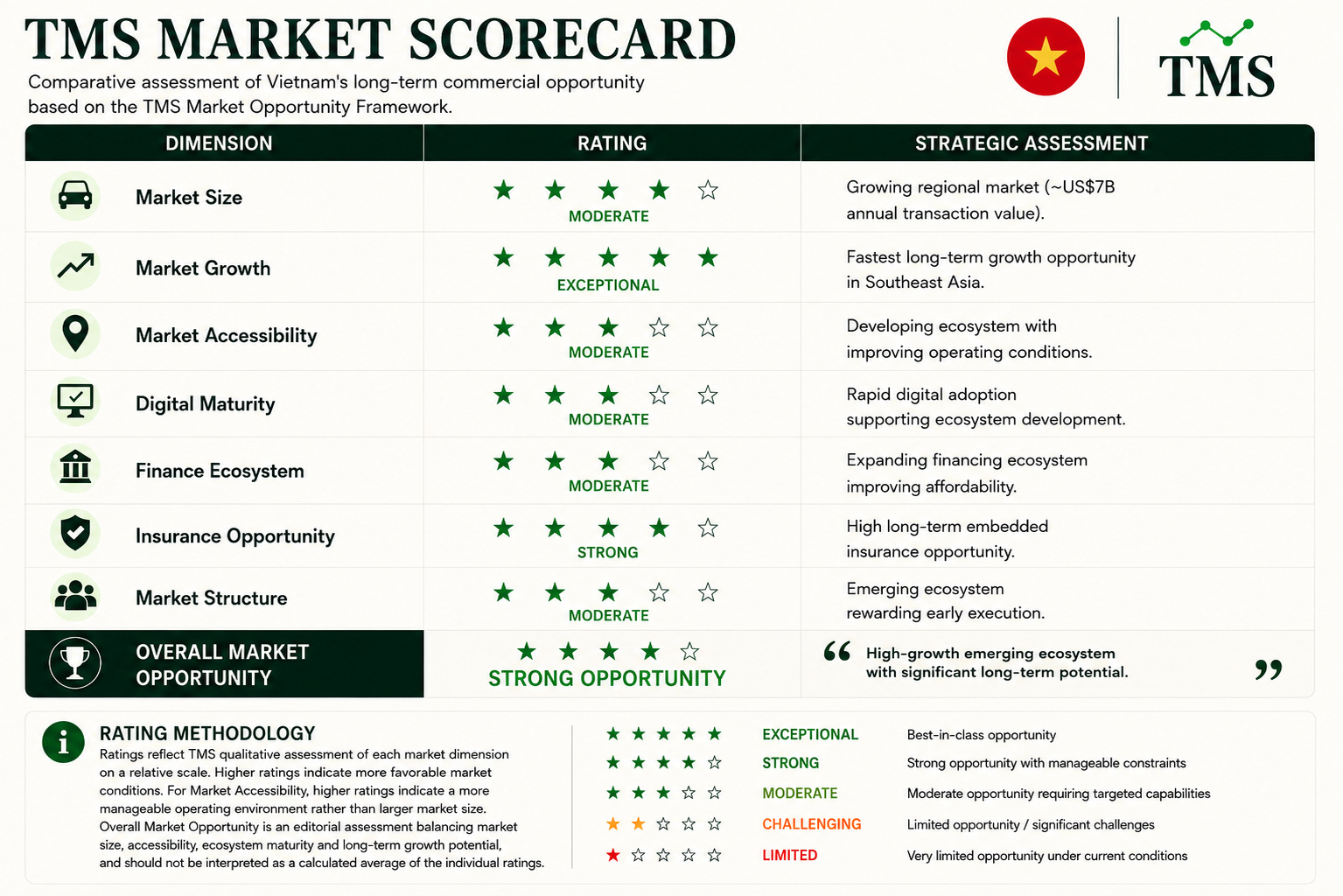
The greatest long-term opportunities are created by helping build markets as they develop rather than simply competing within established ones. Strong economic growth, rising vehicle ownership and accelerating digital adoption provide the foundation for sustained expansion over the coming decade. Businesses that establish trusted brands, scalable operating models and enduring customer relationships early will be best positioned to grow alongside Vietnam's automotive market.
Singapore: Southeast Asia’s Most Accessible Used Car Market
Singapore is Southeast Asia’s smallest major used car market, yet it possesses the region’s most mature, digitally connected and operationally efficient automotive ecosystem. Strict regulation, comprehensive vehicle records and strong financial integration have created one of the world’s most transparent and predictable used car markets. With an estimated annual transaction value of approximately US$4 billion, that accessibility can be as important as market size when evaluating business opportunity.
Unlike neighbouring markets, Singapore’s Certificate of Entitlement (COE) system and highly digital regulatory framework create exceptional transparency throughout the vehicle purchasing process. Low transaction risk, reliable pricing and standardized market processes allow businesses to focus on servicie quality and operational excellence rather than overcoming structural inefficiencies.
Although transaction volumes are lower than elsewhere in Southeast Asia, financing, insurance and ownership transfer are already seamlessly connected. This highly coordinated market enables businesses to build recurring customer relationships while operating within one of the world's most efficient automotive environments.
Singapore's advanced digital infrastructure, regulatory transparency and connected financial ecosystem continue to attract innovation across automotive technologies and mobility services.
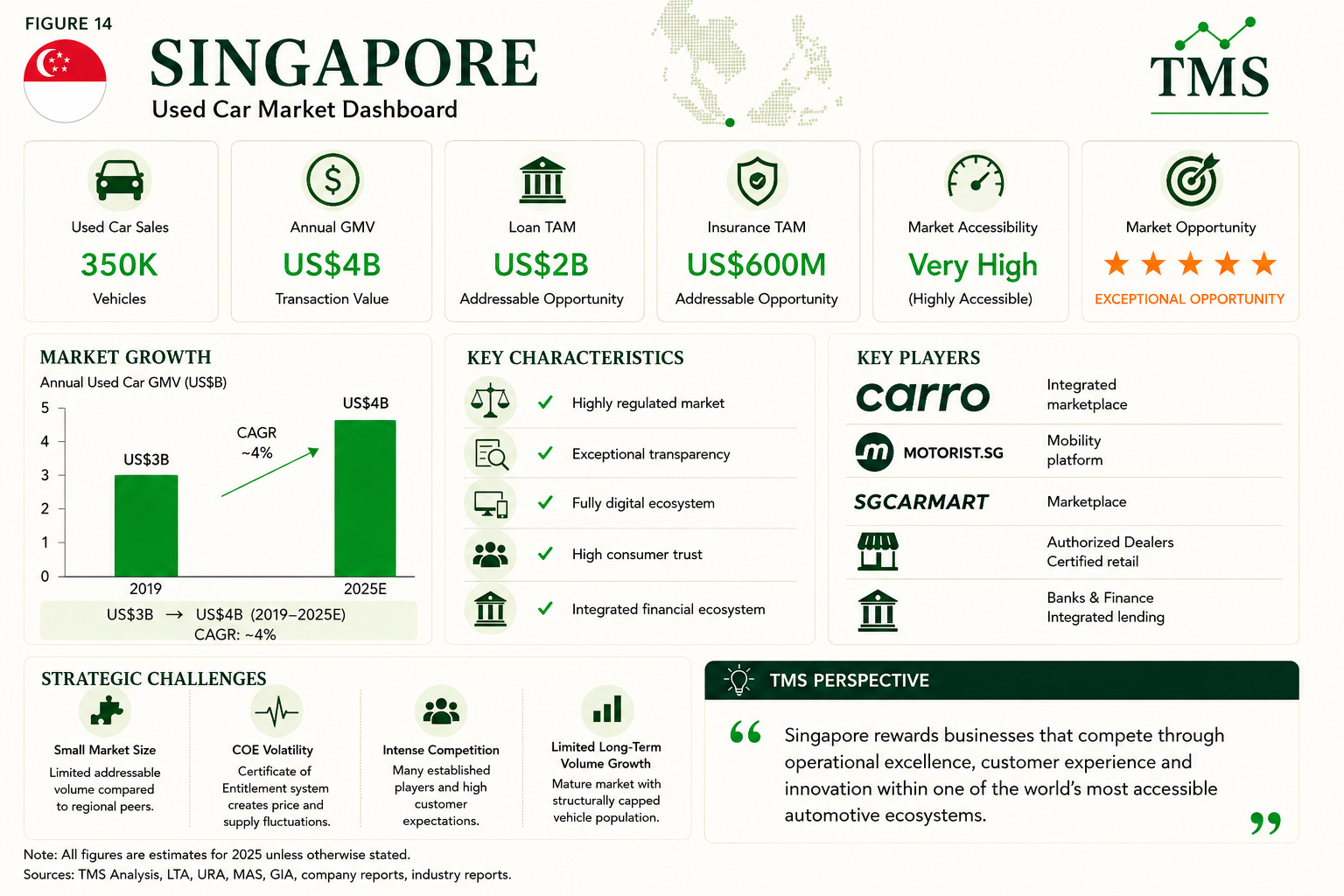
Figure 14. Singapore's dashboard summarizes the ecosystem characteristics that make it Southeast Asia's most accessible used car market.
Digital Mobility Ecosystem
Singapore has become Southeast Asia’s innovation hub for automotive technology. Regional leaders including Carro and Motorist.sg originated or maintain significant operations in Singapore, supported by one of Asia’s most digitally connected consumer markets. Connected digital services enable consumers to research, finance and purchase vehicles online.
Because the market’s core infrastructure is already well established, innovation focuses on improving convenience, service quality and operational efficiency rather than overcoming structural inefficiencies.
This makes Singapore an ideal environment for developing, validating and scaling new automotive technologies before regional expansion. Businesses can test products, refine operating models and reduce execution risk in a predictable environment before entering Southeast Asia’s larger and more complex automotive markets.
TMS Insight 10
Accessibility can create more value than scale.
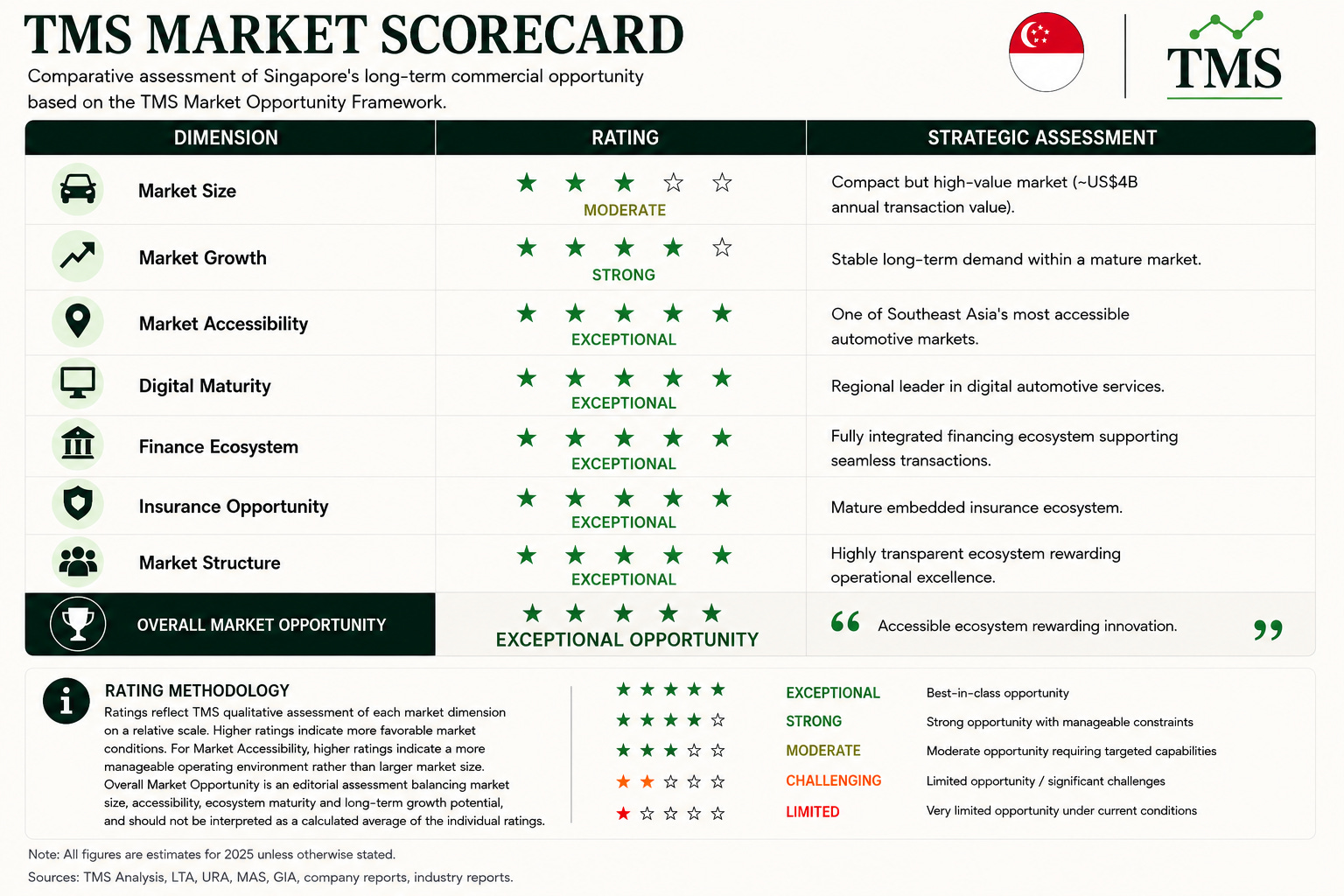
Singapore reinforces the report's central conclusion that accessibility can be just as valuable as market size. Although it has the smallest addressable market among the six countries analyzed, its transparent regulatory environment, digital maturity and operational efficiency create one of Southeast Asia's most attractive long-term business environments.
Together, these six country profiles demonstrate that Southeast Asia is not a single used car market, but six distinct market archetypes. Each rewards a different combination of market size, accessibility and business capability. Long-term success depends less on pursuing a single regional strategy than on aligning business models with the structural realities of each market.
Strategic Implications
Throughout this report, we have shown that market opportunity is determined by far more than transaction volume alone. Ecosystem maturity, accessibility, digital adoption, regulation and market structure create six distinct automotive archetypes across Southeast Asia. Understanding these archetypes explains why business models that succeed in one market often struggle in another.
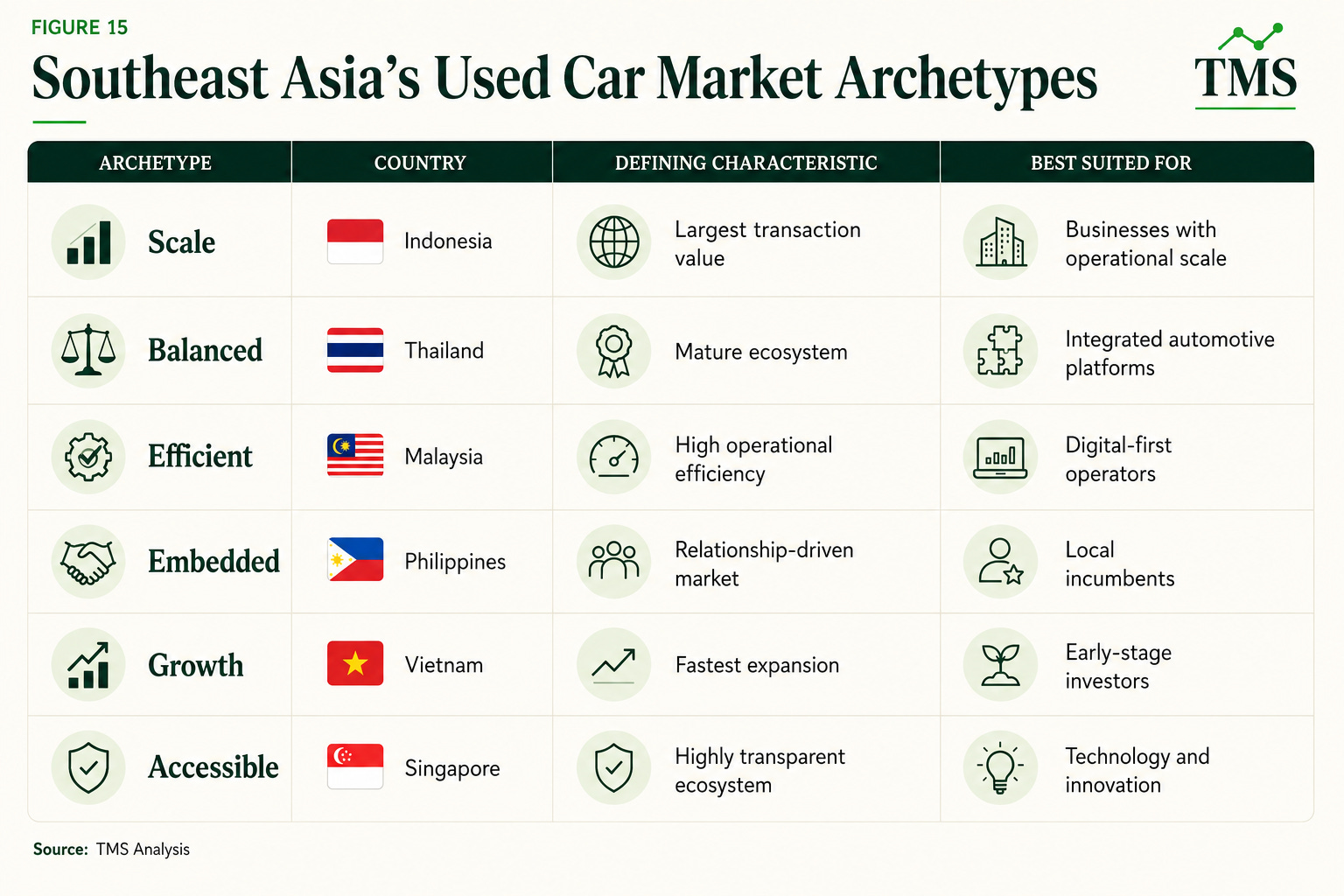
Each archetype rewards a different set of capabilities:
Indonesia: Operational excellence at national scale despite significant geographic complexity.
Thailand: Differentiation within a mature, highly competitive market.
Malaysia: Operational discipline and efficiency rather than scale.
Philippines: Customer orchestration across fragmented dealer networks.
Vietnam: Early ecosystem building before market maturity.
Singapore: Innovation enabled by accessibility, transparency and digital infrastructure.
Taken together, these six market archetypes demonstrate that there is no single winning strategy for Southeast Asia. Success depends on aligning business capabilities with local market structure rather than applying a uniform regional approach. A strategy that succeeds in Singapore's highly accessible ecosystem may struggle in the Philippines' fragmented market, while capabilities developed for Indonesia's operational complexity may be unnecessary in Malaysia's highly efficient environment.
The next section examines how different automotive business models align with Southeast Asia’s six market archetypes.
Winning Business Models Across Southeast Asia
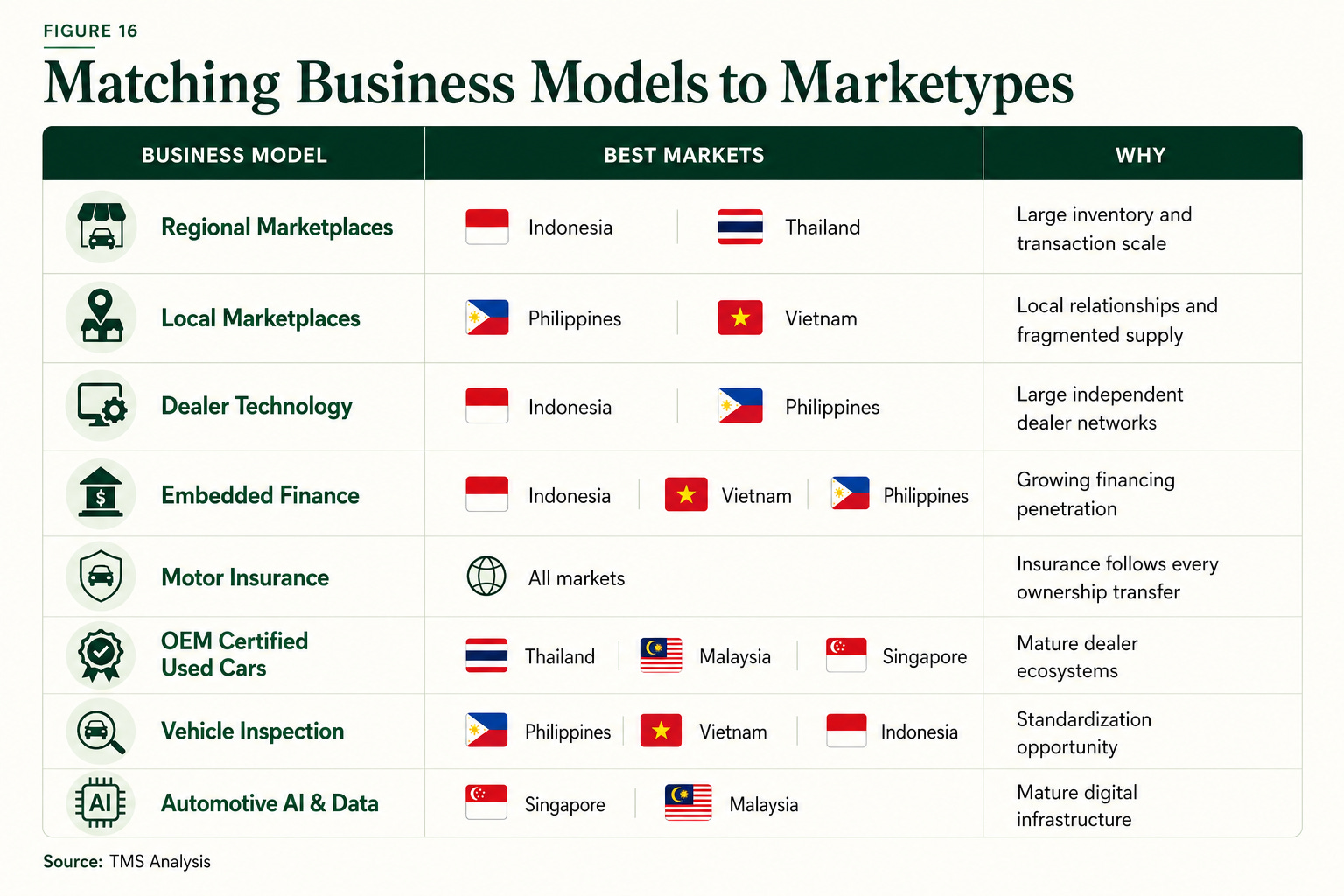
Different automotive business models succeed under different market conditions. Some depend on transaction scale, while others benefit from mature markets, fragmented dealer networks or highly accessible digital environments. These differences explain why a strategy that succeeds in one country may struggle in another.
Choosing the right market is only part of the equation. Long-term success depends on aligning business models with the structural characteristics of each market, ensuring that expansion strategies match local conditions rather than transaction volume alone.
Rather than ranking countries from best to worst, the following framework matches different automotive business models with the market archetypes where they are most likely to succeed.
Figure 16. Different automotive business models thrive under different market conditions. This framework illustrates where each business model is best positioned to succeed across Southeast Asia's six automotive archetypes.
Success in Southeast Asia depends less on choosing the largest market than on identifying where a business model has the strongest structural fit.
TMS Insight 11
There is no single best market, only the best market for your business model.
Success in Southeast Asia's used car economy depends on aligning business models with the characteristics of each market rather than applying a single regional strategy. Businesses that align their capabilities with local market conditions are more likely to succeed than those that rely on a single approach across the region.
The framework presented throughout this report reflects Southeast Asia's automotive industry today. Over the coming decade, advances in digital platforms, embedded finance, insurance and vehicle data will reshape how value is created throughout a vehicle's lifetime. The following section explores the structural trends likely to define the next phase of Southeast Asia's used car economy.
The greatest opportunities in Southeast Asia will belong to businesses that recognize that each market rewards different capabilities. Long-term success comes not from pursuing a single regional strategy, but from aligning business models with the structural realities of each automotive ecosystem.
The Future of Southeast Asia’s Used Car Economy
Southeast Asia's used car economy is entering its next phase of structural transformation. As digital platforms, financing, insurance and vehicle data become more closely connected, buying, financing and owning a vehicle are becoming more transparent, data-driven and convenient. While each country will continue to develop at its own pace, these structural shifts are creating new opportunities for dealerships, lenders, insurers and technology platforms.
The following six structural trends are likely to shape the next phase of Southeast Asia's used car economy.
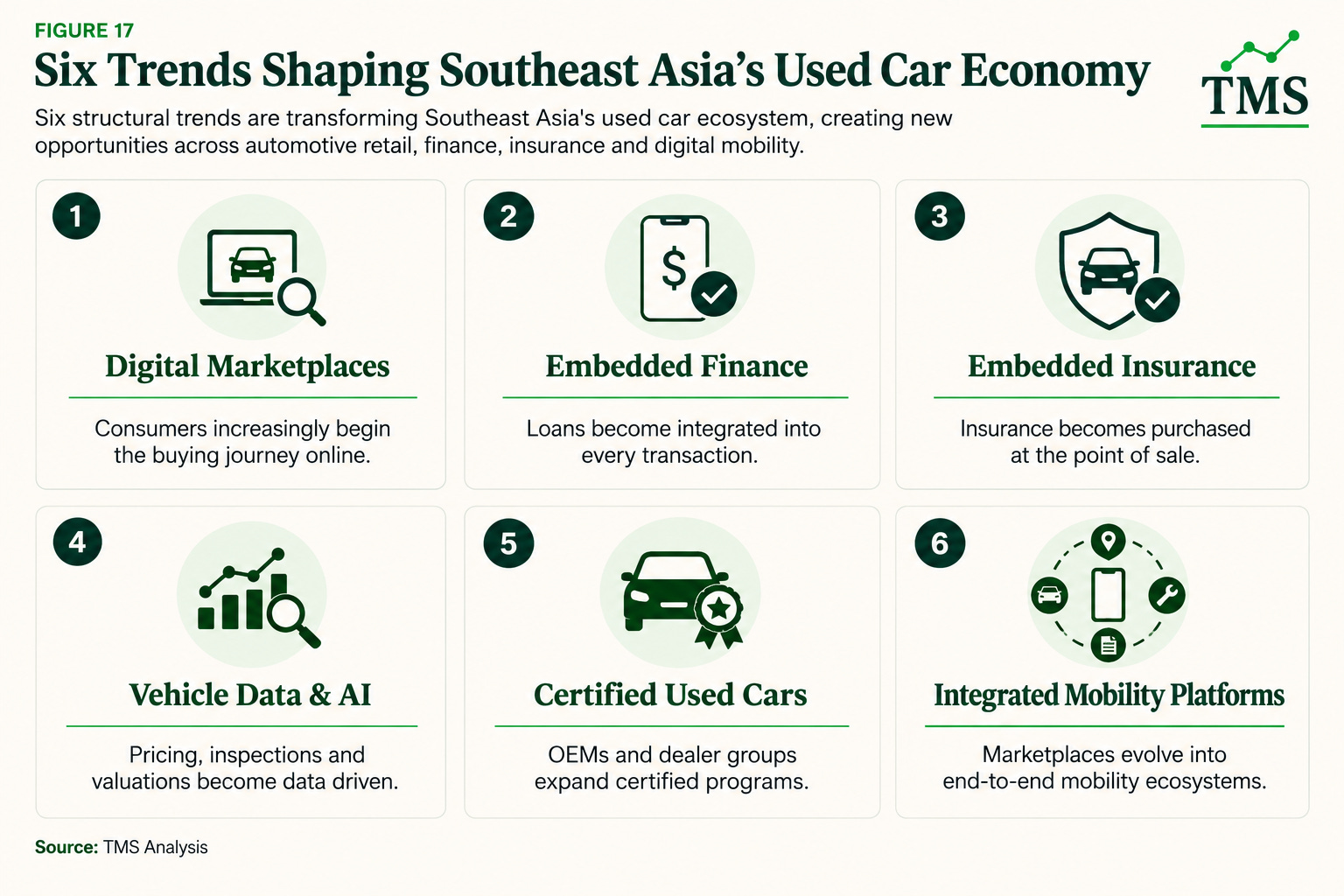
Figure 17. Six structural trends are reshaping Southeast Asia's used car economy, creating new opportunities for dealerships, lenders, insurers and digital platforms.
TMS Insight 12
The future belongs to businesses that own customer journeys, not individual transactions.
As more of the vehicle purchasing process moves online, consumers increasingly expect financing, insurance, inspections and ownership transfer to work together rather than as separate transactions. Advances in digital platforms, embedded finance and connected vehicle data will accelerate this shift, enabling businesses to build long-term customer relationships rather than relying on a single vehicle sale.
The following section distills these developments into three strategic lessons for businesses operating across Southeast Asia's automotive ecosystem.
Southeast Asia's Next Automotive Growth Story
Every vehicle creates an economic lifecycle that extends far beyond its initial sale, creating recurring demand for financing, insurance, servicing and digital platforms. As this report demonstrates, that secondary economy already represents more than US$70 billion in annual transaction value, making it one of Southeast Asia's most significant long-term mobility opportunities.
1. Vehicles Create Value Throughout Their Lifetime
Although the automotive industry has traditionally measured success through new vehicle sales, a vehicle’s economic lifecycle extends far beyond its initial purchase. Over 15 to 20 years, a single vehicle may change ownership multiple times, creating new opportunities for dealers, lenders, insurers and digital platforms.
Rather than representing a single transaction, each vehicle becomes a long-lived economic asset that generates recurring demand throughout the vehicle's lifetime. This continuous cycle of ownership supports sustained economic activity while creating multiple revenue opportunities across financing, insurance, servicing and technology.
As this report has shown, Southeast Asia’s US$70 billion used car economy is built on this recurring cycle of ownership. For businesses, the greatest opportunity lies not in maximizing the value of a single transaction, but in increasing customer lifetime value across every stage of vehicle ownership.
TMS Insight 13
A vehicle is manufactured once, but its value is created throughout its lifetime.
2. Opportunity Is Determined by More Than Market Size
Throughout this report, one conclusion has remained consistent: market opportunity depends on more than size. Accessibility, ecosystem maturity, digital development, regulation and competitive dynamics all influence how effectively businesses can compete and grow. The most successful organizations align their capabilities with the structural characteristics of each market rather than applying a single regional strategy.
Indonesia rewards operational scale, but capturing that opportunity requires operational excellence and nationwide execution. Thailand combines market maturity with a highly competitive ecosystem, while Malaysia rewards operational efficiency and digital capability. The Philippines favors businesses with strong local relationships, Vietnam offers compelling long-term growth potential, and Singapore demonstrates how accessibility and transparency can create competitive advantage despite its relatively small market.
The lesson is clear: there is no universal definition of the “best” market. Long-term success depends on matching business models and capabilities to local market conditions.
TMS Insight 14
Long-term success depends on aligning business models with market structure, not market size.
3. Integration Is Becoming the Competitive Advantage
The next phase of Southeast Asia's automotive industry will be defined by the ability to connect financing, insurance, servicing and vehicle data into a seamless customer experience rather than offering individual products or services. As more of the vehicle purchasing process moves online, consumers expect these services to work together rather than as separate transactions.
Businesses that orchestrate financing, insurance, servicing and ownership transfer will build stronger customer relationships, increase customer lifetime value and generate more resilient revenue streams than those focused on individual transactions.
This shift is already reshaping the competitive landscape. Businesses are expanding beyond traditional market boundaries by connecting financing, insurance, vehicle data and digital platforms into a seamless customer journey. As the boundaries between dealerships, lenders, insurers and technology providers continue to blur, tomorrow's leaders will be those that orchestrate the entire customer journey rather than compete within a single segment of the market.
TMS Insight 15
Integration, not individual products, will define the next generation of automotive leaders.
The next decade of Southeast Asia's used car economy will be defined not by the number of vehicles sold, but by the value created throughout each vehicle's lifetime. Businesses that align their strategies with local market structure, build integrated customer journeys and invest in long-term ecosystem capabilities will be best positioned to capture that opportunity.
Methodology
This report combines publicly available industry data with proprietary market analysis developed by The Mobility Signal (TMS) to estimate the size of Southeast Asia's used car economy and evaluate commercial opportunities across financing, insurance and digital mobility.
Data Sources
Primary inputs were obtained from a combination of:
National vehicle registration authorities
Automotive industry associations
Central banks and financial regulators
Insurance regulators and industry associations
Company annual reports and investor presentations
Automotive marketplaces and dealer networks
Publicly available market research and industry publications
These sources were supplemented with TMS analysis to ensure consistency across markets.
Used Car Market Value (GMV)
Annual Gross Merchandise Value (GMV) represents the estimated total value of used vehicle transactions within each market.
GMV estimates were calculated using:
Estimated Annual Used Car Transactions × Estimated Average Transaction Value
Transaction estimates were derived from combinations of vehicle registration data, ownership transfer activity, fleet turnover rates, new vehicle sales and market structure where official used car transaction data was unavailable.
Average transaction values were estimated using marketplace listings, dealer pricing, certified used vehicle programs and publicly available market information.
Used Vehicle Loan Opportunity (Loan TAM)
Loan Total Addressable Market (Loan TAM) estimates represent the potential annual value of used vehicle financing originated within each market.
Loan TAM was estimated using:
Used Car GMV × Estimated Finance Penetration
Finance penetration assumptions reflect the maturity of each country’s automotive lending market, including commercial banks, captive finance companies and specialist automotive lenders.
Motor Insurance Opportunity
Insurance Total Addressable Market (Insurance TAM) estimates represent the potential annual value of motor insurance associated with used vehicle transactions.
Insurance opportunity estimates were developed using:
Estimated insurance penetration
Average annual premium levels
Vehicle financing penetration
Market structure and consumer purchasing behavior
Insurance opportunity estimates are designed to compare relative market potential rather than forecast future premium volumes.
Market Opportunity Framework
Just before Market Accessibility.
The TMS Market Opportunity Framework evaluates each market across seven structural dimensions:
• Market Size
• Market Growth
• Market Accessibility
• Digital Maturity
• Finance Ecosystem
• Insurance Opportunity
• Market Structure
Overall Market Opportunity is an editorial assessment balancing these dimensions rather than a mathematical average.
Market Accessibility
Market Accessibility is a qualitative assessment developed by TMS to evaluate how easily businesses can create and capture value within each market. Higher accessibility ratings indicate a more favorable operating environment rather than a larger market opportunity.
Factors considered include:
Dealer network maturity
Consumer trust
Digital adoption
Financing availability
Insurance penetration
Regulatory environment
Market fragmentation
Operational complexity
Accessibility ratings are intended to compare structural market conditions rather than overall market attractiveness.
Overall Market Opportunity
Overall Market Opportunity is an editorial assessment developed by The Mobility Signal (TMS) that evaluates the long-term commercial attractiveness of each market. Unlike market size alone, it balances structural factors including market accessibility, ecosystem maturity, digital development, financing and insurance ecosystems, competitive dynamics and long-term growth potential.
The assessment reflects the capabilities required to create and capture value within each automotive ecosystem. Markets with smaller transaction volumes may receive higher Overall Market Opportunity ratings if their operating environments are more accessible, transparent or commercially attractive than larger but more operationally complex markets.
Overall Market Opportunity is an editorial assessment rather than a mathematical average of the individual dimensions. It reflects TMS’s view of each market’s long-term strategic attractiveness based on a consistent framework applied across all six countries.
Important Note
All market sizes, transaction values, financing opportunities and insurance opportunities presented in this report represent estimates based on publicly available information and proprietary TMS analysis. Although every effort has been made to ensure consistency and reasonableness, the figures presented should be interpreted as directional estimates designed to support strategic decision-making rather than official market statistics.
The Mobility Signal believes that consistent methodology across markets provides a more meaningful basis for comparison than relying on individual country estimates derived using different assumptions and reporting standards.
About The Mobility Signal
The Mobility Signal is an independent research and advisory publication focused on automotive, mobility, finance and insurance across Southeast Asia. Our research combines public market data with proprietary analysis to help investors, operators and industry leaders understand the region's evolving mobility ecosystem.
Selected References
The analysis presented in this report draws upon publicly available data from government agencies, automotive industry associations, financial regulators, insurance organizations and market research firms. These sources were supplemented with proprietary analysis by The Mobility Signal.
Government & Vehicle Registration
Land Transportation Office (Philippines)
Department of Land Transport (Thailand)
Road Transport Department (Malaysia)
Singapore Land Transport Authority
Indonesian National Police Vehicle Registration Statistics
Vietnam Register
Automotive Industry Associations
CAMPI – Chamber of Automotive Manufacturers of the Philippines
Truck Manufacturers Association (Philippines)
GAIKINDO – Association of Indonesian Automotive Industries
Federation of Thai Industries (Automotive Industry Club)
Malaysian Automotive Association (MAA)
Vietnam Automobile Manufacturers Association (VAMA)
Central Banks & Financial Regulators
Bangko Sentral ng Pilipinas (BSP)
Bank Indonesia
Bank Negara Malaysia
Bank of Thailand
State Bank of Vietnam
Monetary Authority of Singapore (MAS)
Insurance Industry
Philippine Insurers and Reinsurers Association (PIRA)
General Insurance Association of Malaysia (PIAM)
Office of Insurance Commission (Thailand)
General Insurance Association of Singapore (GIA)
Insurance Association of Vietnam
Indonesian General Insurance Association (AAUI)
Automotive Marketplaces & Industry Participants
AutoDeal
Carsome
Carro
SGCarMart
One2Car
Mudah.my
Chợ Tốt Xe
Bonbanh
OLX Autos
Carmudi
Motorist.sg
Research & Industry Publications
Deloitte
McKinsey & Company
PwC
KPMG
Bain & Company
Frost & Sullivan
Mordor Intelligence
IMARC Group
Statista
ASEAN Automotive Federation
Company Reports
Annual reports and investor presentations from regional automotive technology companies, banks, insurers and publicly listed dealer groups.
Suggested Citation
The Mobility Signal. (2026). Quantifying Southeast Asia’s Used Car Economy: Beyond New Car Sales Lies a US$70B Ecosystem of Transactions, Finance and Insurance.