


New here? Join The Mobility Signal for on-the-ground intelligence from Southeast Asia’s automotive and mobility markets, built for industry leaders, investors, private equity, venture capital and advisors who need to understand what is changing and what it means.
Executive Summary
Much of the global mobility conversation assumes that electrification follows a similar path across every market. In reality, the transition is shaped by government policy, consumer economics, industrial strategy, infrastructure and manufacturing capability. Different regions are therefore progressing towards lower-emission mobility in very different ways.
Southeast Asia is a clear example of this divergence.
China and parts of Europe have moved further towards higher levels of BEV adoption, while Southeast Asia is developing a more varied mix of powertrain pathways. The region is electrifying through a diverse mix of hybrid electric vehicles (HEVs), plug-in hybrid electric vehicles (PHEVs), range-extended electric vehicles (REEVs) and battery electric vehicles (BEVs), with each country progressing through a different combination of technologies.
This report examines five of Southeast Asia’s largest automotive markets: Thailand, Vietnam, Indonesia, Malaysia and the Philippines, seeking to understand why these pathways differ. The analysis shows that electrification is being shaped not only by consumer demand, but also by industrial policy, domestic manufacturing capability, charging infrastructure, housing, geography and the competing strategies of Japanese and Chinese manufacturers.
To better understand this transition, TMS introduces the Engine Transition Framework. Rather than measuring battery electric vehicle adoption alone, the framework distinguishes between Engine-Equipped vehicles (ICE, HEV, PHEV and REEV) and Engine-Free vehicles (BEVs). This provides a complementary perspective on how markets are reducing the role of the internal-combustion engine at different speeds and through different powertrain mixes.
The report argues that Southeast Asia is experiencing a progressive change in the role of the internal-combustion engine. In conventional vehicles, the engine provides all propulsion; in hybrid and plug-in hybrid vehicles, it shares that role with an electric motor; and in BEVs, it disappears entirely.
Southeast Asia should therefore not be viewed as a single electrification market. It represents a collection of national transitions, each shaped by its own economic, industrial and policy realities. Engine-free mobility is expanding, but the pace and powertrain mix of the transition will differ considerably across the region.
Part of the TMS Mobility Framework Series
Why do these markets look so different?
Chart 1 shows that Southeast Asia is not following a single pathway to electrification. The five markets analysed display markedly different powertrain mixes reflecting differences in industrial policy, manufacturing investment, infrastructure, geography, housing, consumer economics and manufacturer strategy.
Vietnam and Thailand have the highest BEV shares, while Thailand also has the largest share of engine-equipped electrified vehicles among the five markets analysed. Malaysia and the Philippines remained predominantly ICE markets in 2025, although H1 2026 developments suggest that electrified powertrains are gaining share. Indonesia sits between these positions, combining a large conventional market with a meaningful and developing BEV segment.
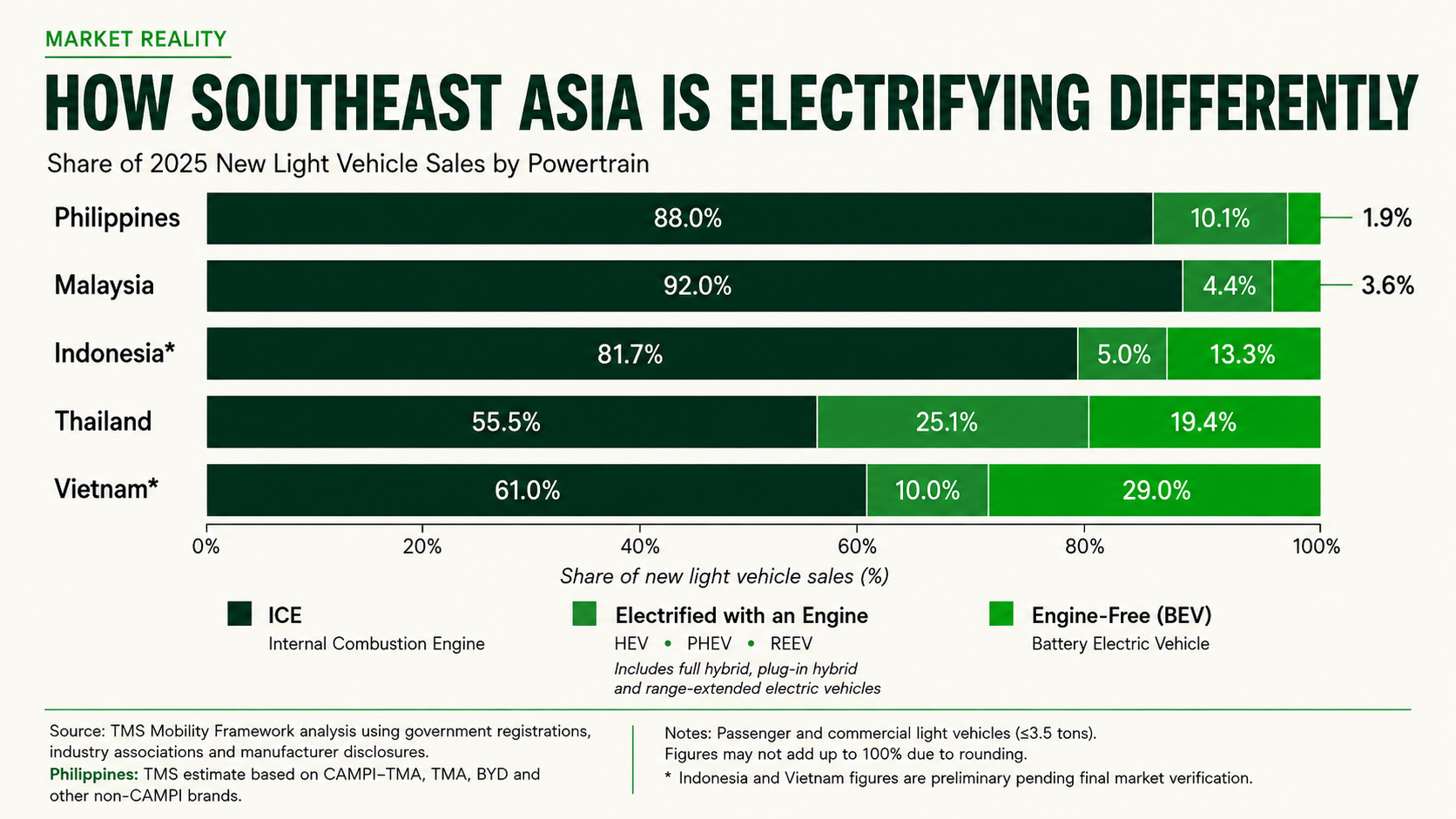
Chart 1. How Southeast Asia is electrifying differently. Powertrain mix of full-year 2025 new light-vehicle sales across the five markets analysed.
Thailand: Leveraging its "Detroit of Asia" Position
Thailand has established itself as Southeast Asia’s leading automotive manufacturing hub over the past six decades, earning the nickname “Detroit of Asia,” with annual vehicle production approaching two million units. To maintain this position as the region transitions towards electrified mobility, Thailand has continued to attract substantial investment. As of May 2026, the country’s Board of Investment had approved 198 EV-related projects, representing more than US$4.1 billion in committed investment across vehicle production, batteries, components and supporting infrastructure.
This strategy has attracted significant investment from Chinese manufacturers, which now compete alongside long-established Japanese automakers. The result is a market where 44.5% of new light-vehicle sales are electrified, comprising 25.1% engine-equipped electrified vehicles and 19.4% battery electric vehicles. Thailand has therefore developed a diversified electrified market in which hybrids and battery electric vehicles coexist.
Supported by a mature manufacturing ecosystem, investment incentives and growing competition between Japanese and Chinese manufacturers, Thailand has developed the most diversified powertrain mix among the five markets analysed.
Vietnam: Building a Domestic EV Champion
Vietnam has followed a different pathway to electrification, driven largely by the rapid rise of domestic manufacturer VinFast. Unlike Thailand, where growth has been supported by a broad mix of international manufacturers, Vietnam’s transition has been anchored by a domestic manufacturer. VinFast’s market presence, charging network and visibility across private and fleet vehicles may have helped make electric mobility more familiar and reduce some of the uncertainty associated with adopting a new vehicle technology.
Government support through reduced registration fees and tax incentives has lowered barriers to adoption. VinFast’s charging-network expansion, together with the electrification of taxi fleets, public transport and corporate vehicles, has made BEVs increasingly visible in everyday life, reinforcing consumer confidence in EV ownership.
During H1 2026, VinFast reported preliminary domestic deliveries of 115,916 electric vehicles, an increase of 72% year on year, which VinFast described as the first time an automotive brand in Vietnam had exceeded 100,000 domestic deliveries in the first half of a calendar year. Supported by government incentives and nationwide charging infrastructure, Vietnam recorded the highest 2025 BEV share among the five markets analysed, with BEVs accounting for 29.0% of new light vehicle sales.
Vietnam demonstrates how a strong domestic manufacturer, supported by coordinated policy, charging infrastructure and fleet adoption, can accelerate the transition towards engine-free mobility.
Indonesia: Building a Regional EV Supply Chain
Indonesia is developing one of the region’s most significant electrification markets. In 2025, BEV sales accounted for 13.3% of new light-vehicle sales, while the total electrified share reached 18.3%. Although the market remains at an early stage of the engine transition, BEV adoption is expanding rapidly.
This momentum has been supported by government policy and substantial investment from Chinese manufacturers, including BYD, Wuling and Chery. Measures such as reduced VAT for qualifying EVs, import-duty concessions linked to local manufacturing commitments and minimum local-content requirements have encouraged automakers to establish production facilities while improving the affordability of BEVs.
Indonesia was the world’s largest producer of mined nickel in 2024, accounting for an estimated 62% of global production. In June 2025, the country broke ground on an integrated nickel and battery supply-chain project valued at approximately US$5.9 billion, developed by a consortium involving ANTAM, Indonesia Battery Corporation and CATL-linked partners. The project extends across the battery value chain, from nickel mining and processing in East Halmahera to cathode materials, battery recycling and battery-cell manufacturing in Karawang. These investments reinforce Indonesia’s ambition to move beyond mineral production and become a regional battery and EV manufacturing hub.
Malaysia: An Emerging BEV Market
In 2025, Malaysia remained at an early stage of the engine transition. BEVs accounted for 3.6% of new light vehicle sales, while a further 4.4% came from electrified vehicles that still retained an engine. Together, this meant that 96.4% of vehicles sold remained engine-equipped, reflecting a market where electrification was growing but technologies that retained an engine still dominated.
H1 2026 provided an early indication that BEV adoption may be entering a faster growth phase. Battery electric vehicle sales more than doubled, increasing by 106% to 26,192 units, narrowly exceeding reported hybrid sales during the six-month period (25,590 units) for the first time. This shift was driven by the launch of affordable locally assembled models such as Proton’s e.MAS range, supported by tax incentives, preferential road-tax treatment, and policies encouraging domestic EV production.
Despite this momentum, charging infrastructure remains concentrated around major urban centres, while subsidised RON95 petrol continues to make conventional vehicles and hybrids highly competitive for many consumers. Malaysia demonstrates how affordable locally assembled EVs can rapidly reshape consumer demand once pricing reaches mass-market levels, even while infrastructure and fuel economics continue to influence purchasing decisions.
Philippines: Electrification Driven by Consumer Economics
The Philippines recorded the lowest 2025 BEV share among the five markets analysed, with BEVs accounting for 1.9% of new light-vehicle sales, while 98.1% remained engine-equipped (Chart 1). Unlike several neighbouring markets, however, its transition is being driven less by direct purchase subsidies and more by consumer efforts to reduce exposure to rising and volatile energy costs.
Government policy has lowered acquisition costs through zero import tariffs and preferential tax treatment for electrified vehicles rather than direct cash incentives. Fuel costs became especially salient during H1 2026, when conflict involving Iran and disruption risks in key oil-shipping routes contributed to renewed global price volatility.
For most motorists, charging availability remains the larger constraint, as public infrastructure is still concentrated around Metro Manila and nearby provinces. According to Deloitte’s 2026 Global Automotive Consumer Study, 62% of surveyed Philippine consumers intending to acquire an electrified vehicle identified lower fuel costs as a leading motivation, while 48% identified limited public charging infrastructure as a key drawback. Hybrids and plug-in hybrids therefore offer a practical alternative, reducing fuel consumption without restricting provincial or long-distance travel.
Electrification accelerated sharply during H1 2026. Among CAMPI–TMA members, electrified vehicles accounted for 15.3% of sales, with 17,148 HEVs, 5,531 PHEVs and 8,702 BEVs sold during the six-month period. However, this excludes several important non-member brands, most notably BYD. On a broader whole-market basis, ACMobility subsequently indicated that electrified vehicles accounted for approximately 22.3% of all Philippine new-vehicle sales during H1 2026. This is broadly consistent with TMS's own reconstruction, which puts the share at around 23% after incorporating our estimate for BYD. That compares with TMS's reconstructed whole-market electrified share of 12.0% in full-year 2025, suggesting that the transition accelerated much faster during the first half of 2026 than the CAMPI–TMA figures alone would imply.
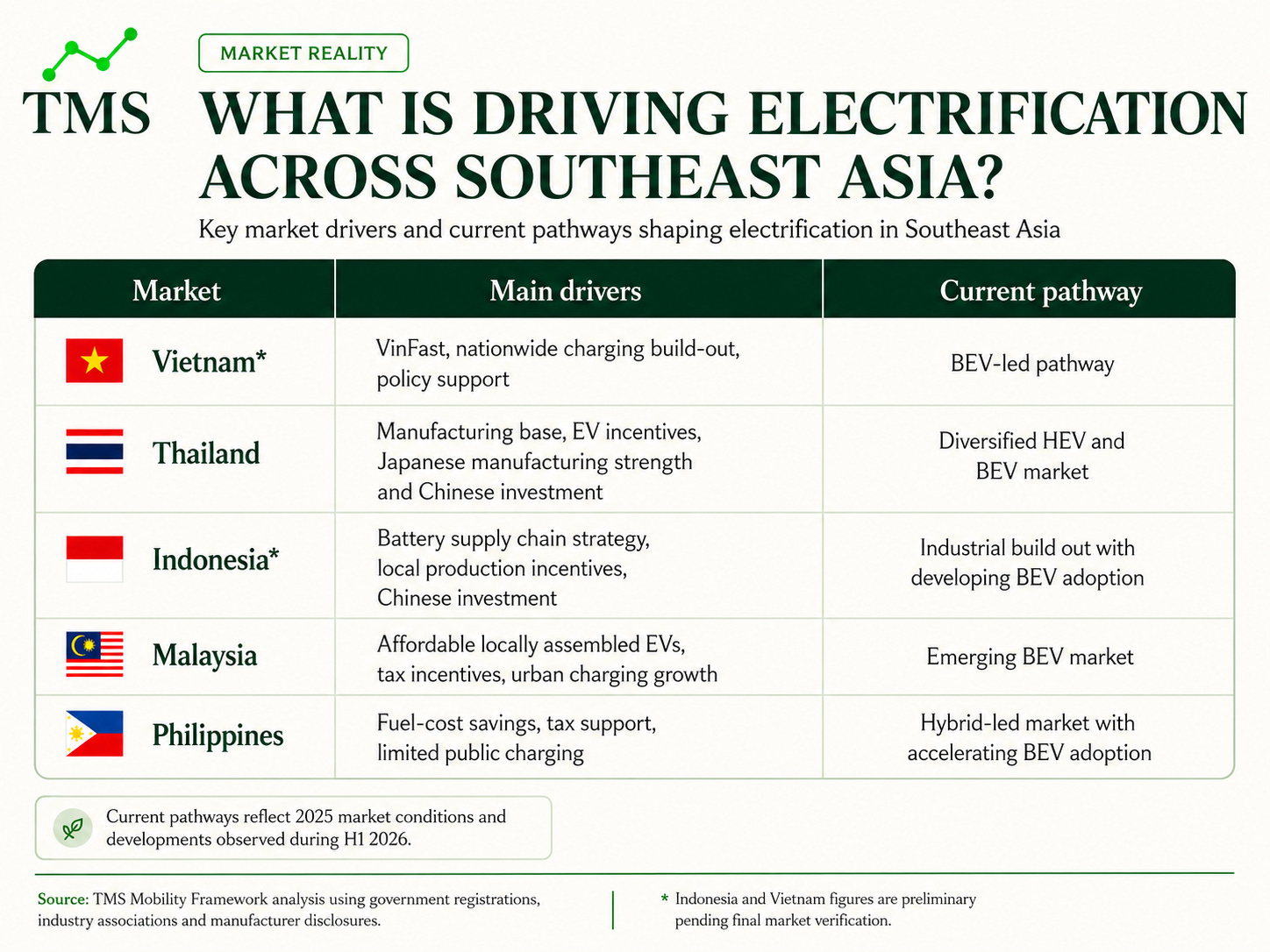
Figure 1. Electrification pathways across Southeast Asia. Key market drivers and current pathways across the five markets analysed.
Rethinking the Transition
The country case studies demonstrate that there is no single pathway towards electrification in Southeast Asia. Each market is developing a different mix of hybrid, plug-in hybrid and battery electric vehicles in response to local economic, industrial and infrastructure conditions.
These differences expose a limitation in how the automotive industry typically measures progress. Headline comparisons often focus primarily on BEV market share, treating all non-BEV powertrains as a single residual category. While useful for tracking BEV adoption, this approach does not show whether electrification is occurring through vehicles that retain a combustion engine or through vehicles that eliminate it.
To provide a complementary perspective, TMS introduces the Engine Transition Framework, which groups new light-vehicle sales into two categories:
Engine-equipped: Internal-combustion-engine vehicles (ICE), hybrid electric vehicles (HEVs), plug-in hybrid electric vehicles (PHEVs) and range-extended electric vehicles (REEVs).
Engine-free: Battery electric vehicles (BEVs).
Measuring the engine transition
Engine-free share is the percentage of total new light-vehicle sales accounted for by BEVs.
Engine-equipped share is the percentage accounted for by vehicles that retain a combustion engine, including ICE, HEV, PHEV and REEV vehicles.
For the categories used in this report, engine-equipped share equals 100% minus engine-free share.
Under this classification, engine-free share is numerically equivalent to BEV market share. The frameworks contribution is a different interpretation of the market: it makes explicit the proportion of new vehicles that retain a combustion engine and the proportion that have eliminated it.
The framework measures the structural presence or absence of the combustion engine. It does not measure lifecycle emissions, fuel consumption, electric kilometres traveled or the relative environmental performance of individual powertrains.
This provides the basis for the analysis that follows.
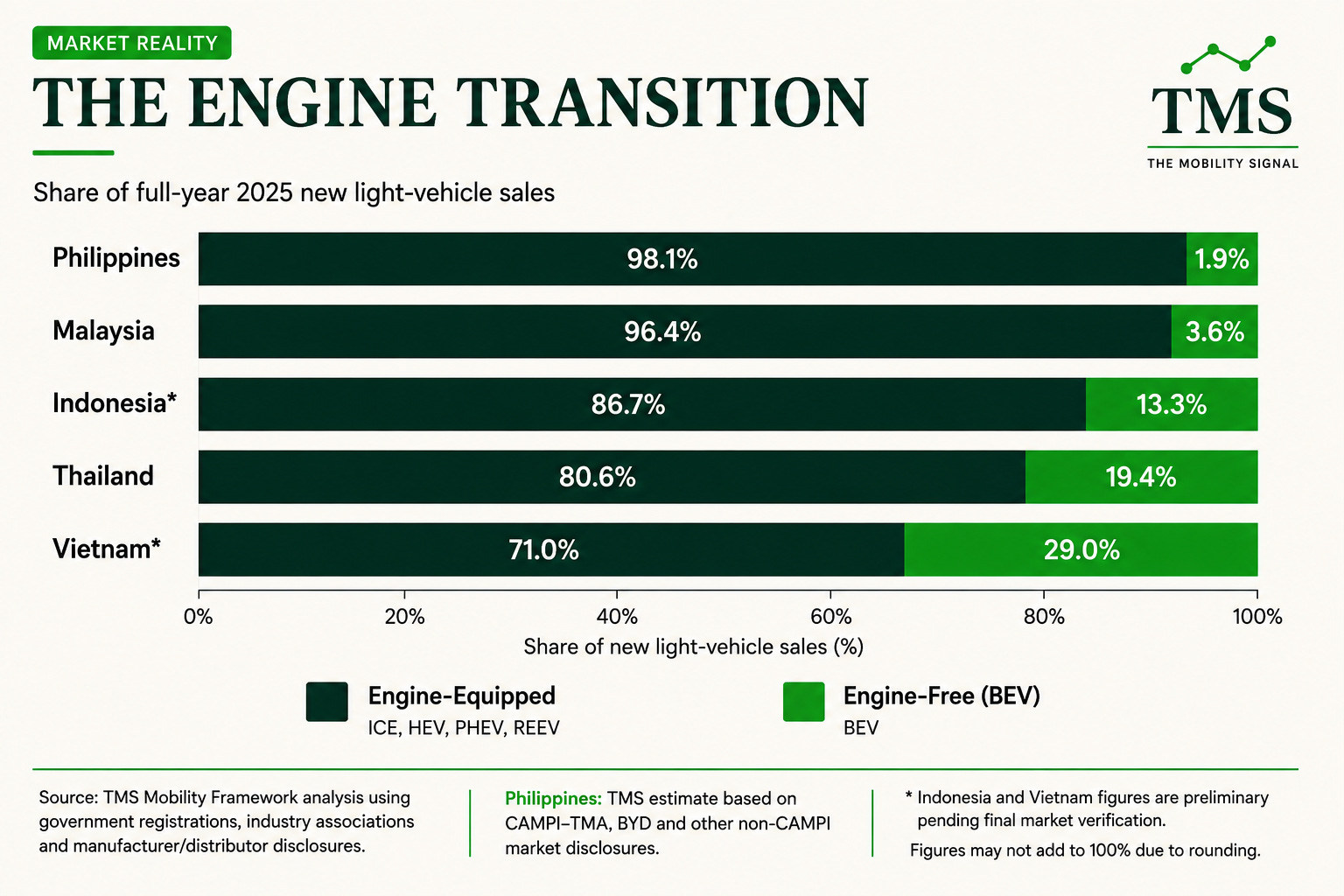
Chart 2. The Engine Transition in Southeast Asia. Engine-equipped and engine-free shares of full-year 2025 new light-vehicle sales. Indonesia and Vietnam figures are preliminary.
Source: TMS Mobility Framework analysis of government, industry-association and manufacturer data.
Understanding the Engine Transition
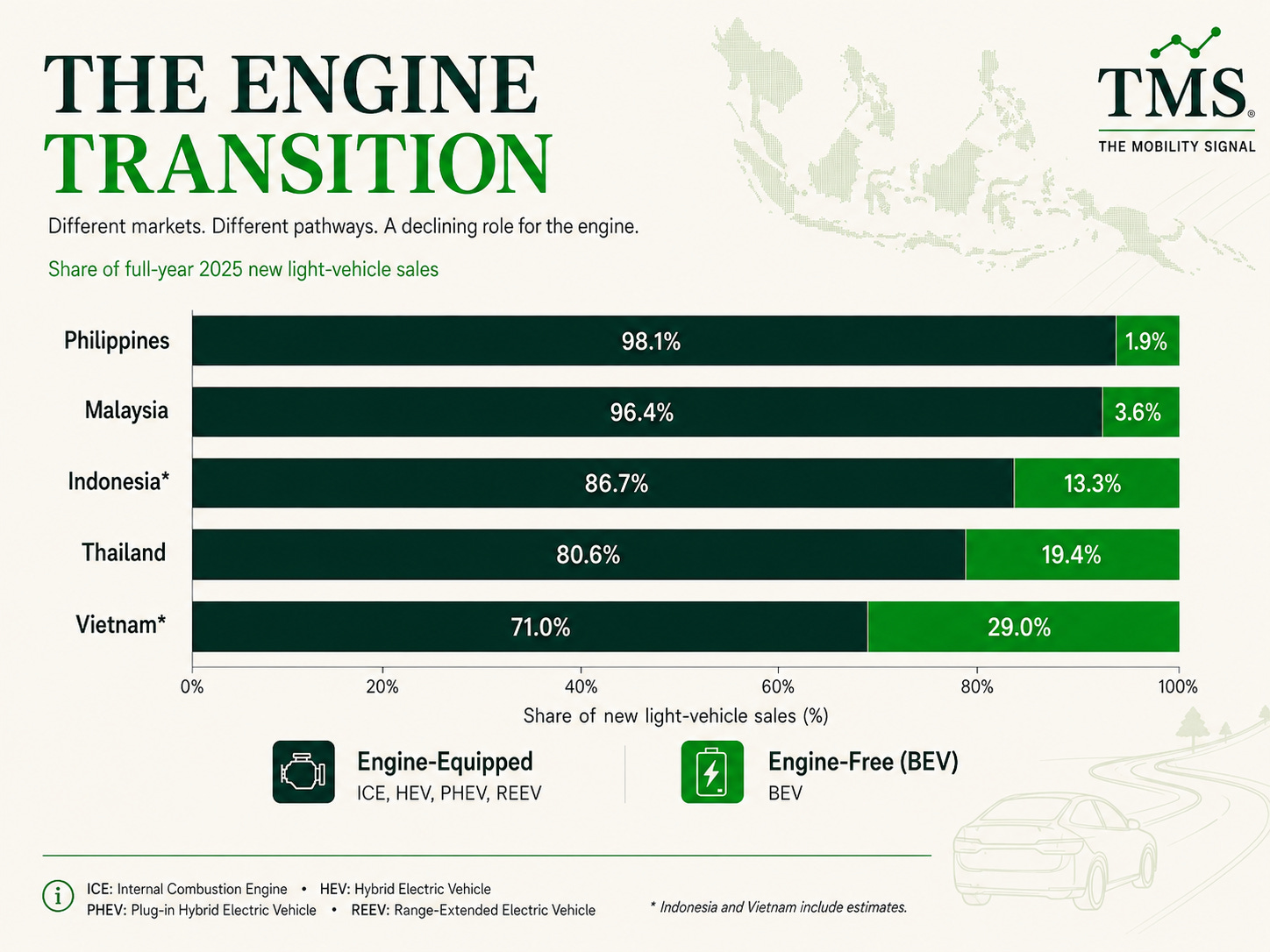
Chart 2 shows that engine-equipped vehicles continued to account for most new light-vehicle sales in every market included in the analysis.
Vietnam and Thailand recorded the highest BEV shares, yet 71.0% and 80.6%, respectively, of new light vehicles sold in 2025 still retained a combustion engine. Engine-equipped shares were 86.7% in Indonesia, 96.4% in Malaysia and 98.1% in the Philippines.
The comparison shows that growth in electrified-vehicle sales does not translate directly into an equivalent reduction in the share of vehicles retaining an engine. In several markets, much of the transition is occurring through hybrids and plug-in hybrids, which combine electric propulsion with the range and refuelling infrastructure associated with conventional vehicles.
Their real-world benefits vary according to vehicle architecture and usage, particularly how regularly plug-in vehicles are charged. Nevertheless, engine-equipped electrified vehicles are likely to remain an important part of Southeast Asia’s transition alongside BEVs.
Strategic Outlook
1. Multiple Pathways
One of the strongest themes emerging from recent academic research and industry analysis is that there is no single pathway towards electrification in Southeast Asia.
China and parts of Europe are further advanced in BEV adoption than most Southeast Asian markets, although their policy and industrial pathways remain distinct. No single factor is determining how a market electrifies, with each market responding to its own mix of consumer economics, infrastructure, industrial capability and government policy. These factors shape not only the pace of electrification, but also the technologies consumers ultimately adopt.
The country analysis reflects that same pattern, with Thailand, Vietnam, Indonesia, Malaysia and the Philippines each displaying a distinct transition pathway.
The result is a region that cannot be explained through a single technology or a single transition model. Instead, Southeast Asia represents a collection of national transitions, each progressing at its own pace and through its own combination of electrified technologies.
Consumer economics
On a country-by-country basis, consumer economics remain among the strongest influences on how markets electrify. In emerging economies, vehicle affordability, financing options, fuel prices and the total cost of ownership often matter more than the technology itself. Consumers ultimately buy the vehicle that best fits their budget and everyday needs, rather than the one with the newest drivetrain.
Infrastructure
Markets with well-developed charging networks and reliable electricity are naturally better positioned to accelerate battery electric vehicle adoption. Where charging remains limited, usually outside of the major cities, or where many consumers live in apartments, condominiums or rural areas without convenient home charging, HEVs and PHEVs may offer a more practical option.
Industrial Capability
Countries with an established automotive manufacturing base, domestic vehicle production or significant battery investment have generally transitioned more quickly than those that rely primarily on imported vehicles. Manufacturing ecosystems influence not only what vehicles are available, but also where manufacturers choose to invest for the future.
Government Policy
Long-term industrial strategies, investment incentives, local content requirements and regulatory certainty help shape manufacturer investment, while tax policies and consumer incentives influence purchasing decisions. The strongest outcomes tend to occur where policy, industry and infrastructure evolve together.
The result is a region where no two markets are transitioning in exactly the same way. The five markets analysed display different levels and forms of electrification. Looking beyond battery electric vehicle market share provides a more complete understanding of how Southeast Asia's automotive market is evolving.
2. Competing Industrial Strategies
Consumer demand, infrastructure and policy help explain why markets develop differently. The other side of the transition is shaped by the strategic choices of vehicle manufacturers. Japanese manufacturers have spent decades building extensive manufacturing, supplier and dealer networks across Southeast Asia, while Chinese manufacturers have entered the region with newer production investments and product portfolios centred more heavily on electrified vehicles.
As electrification has accelerated, most Japanese manufacturers have continued to pursue a multi-pathway strategy, with hybrid and plug-in hybrid vehicles remaining at the core of their regional portfolios while battery electric vehicles are introduced progressively. This reflects both their long-standing strength in hybrid technology and the reality that many Southeast Asian markets are still developing the charging infrastructure, consumer affordability and policy settings needed to support large-scale battery electric vehicle adoption. Rather than accelerating away from the internal-combustion engine, Japanese manufacturers have generally focused on progressively reducing the engine’s role within the powertrain, aligning their product portfolios with the different stages of market development across the region.
Chinese manufacturers have entered Southeast Asia from a very different starting point. Without the same legacy of conventional vehicle production across the region, they have built their product portfolios around electrified power-trains from the outset. While battery electric vehicles remain central to their strategy, many Chinese manufacturers have entered ASEAN markets with portfolios centred on BEVs and plug-in hybrids, while also expanding into hybrids and range-extended vehicles. Supported by vertically integrated battery supply chains, rapid product development and highly competitive pricing, they have been able to respond quickly to changing market conditions while investing heavily in local manufacturing across Thailand and Indonesia.
The result is a region where multiple technologies, multiple manufacturer strategies and multiple transition pathways now coexist. Rather than following a single route towards electrification, Southeast Asia is demonstrating that there are many ways to reduce dependence on the internal-combustion engine, each shaped by the realities of the market it serves.
3. From Electrification to Engine Elimination
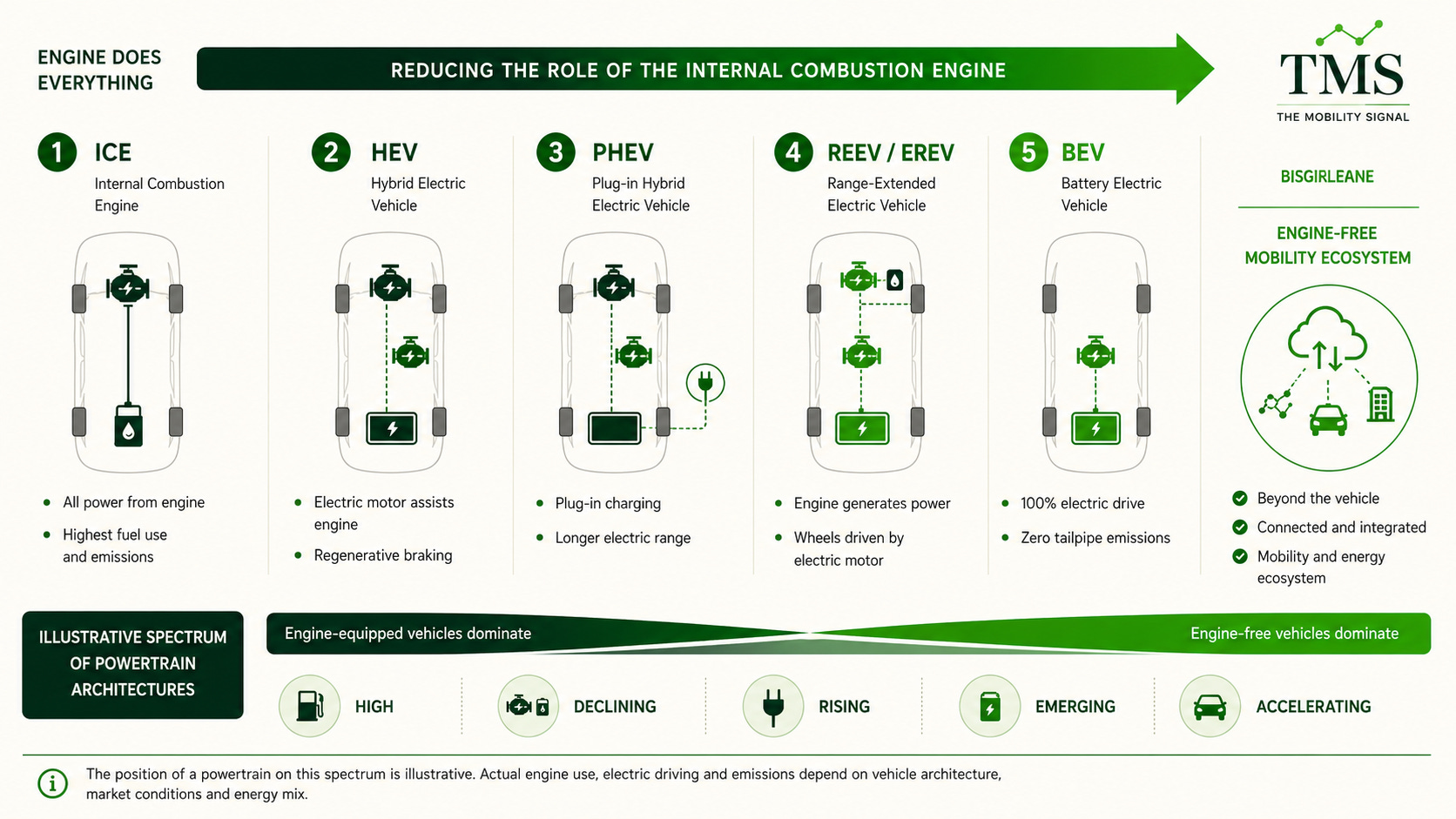
Figure 2. The Engine Transition Framework. An illustrative spectrum showing how the role of the internal-combustion engine changes across ICE, HEV, PHEV, REEV and BEV powertrain architectures.
Note: The technologies shown do not necessarily represent sequential stages. Markets may adopt different combinations simultaneously according to consumer needs, infrastructure, policy and industrial capability. The position of a powertrain on the spectrum is illustrative; actual engine use, electric driving and emissions depend on vehicle architecture, charging behaviour and operating conditions.
The Engine Transition Framework presents an illustrative spectrum of powertrain architectures, showing how the role of the combustion engine changes as electric propulsion becomes more prominent.
In a conventional ICE vehicle, the engine provides all propulsion. In a hybrid vehicle, it shares propulsion duties with one or more electric motors. In a plug-in hybrid, a larger battery can provide a greater proportion of everyday driving when the vehicle is regularly charged. In the range-extended architecture illustrated here, the wheels are driven electrically and the engine functions primarily as an onboard generator. In a battery electric vehicle, the combustion engine is eliminated entirely.
The spectrum does not represent a prescribed or sequential pathway. Markets may adopt different combinations of these technologies simultaneously in response to consumer needs, infrastructure, policy and industrial capability.
Its strategic value is to distinguish between two forms of change: increasing the share of vehicles that eliminate the engine, and reducing the engine’s role within vehicles that continue to retain one.
THE TRANSITION IS NOT ONLY ABOUT WHEN THE ENGINE DISAPPEARS
IT’S ALSO ABOUT HOW QUICKLY ITS ROLE CHANGES BEFORE THAT POINT.
4. Strategic Implications
1. Southeast Asia is not one EV market
Perhaps the most important finding from this report is that Southeast Asia should no longer be viewed as a single electrification market, but as a group of individual markets each shaped by its own combination of industrial policy, consumer economics, infrastructure and manufacturing capability.
Thailand: A diversified HEV and BEV market supported by a mature manufacturing base.
Vietnam: Recorded the highest 2025 BEV share among the five markets analysed, supported by domestic manufacturing and a rapidly expanding charging network.
Indonesia: An industrial strategy centred on batteries, mineral resources and local vehicle production.
Malaysia: An emerging BEV market, supported by incentives, local assembly and urban charging growth.
Philippines: A rapidly expanding engine-electrified market, with HEVs and PHEVs playing important roles alongside accelerating BEV adoption.
The implication is clear: a single regional product strategy is unlikely to reflect the realities of each Southeast Asian market.
2. Infrastructure shapes technology adoption
Charging infrastructure influences more than the pace of electrification; it also influences which technologies consumers adopt. Markets with broad, reliable charging access are better positioned to support BEV adoption. Where public or home charging remains constrained, hybrids and plug-in hybrids may offer a more practical route to lower fuel consumption and greater electrification.
Infrastructure therefore shapes not only how quickly markets electrify, but how they electrify.
3. Industrial policy is becoming a competitive advantage
Long-term industrial policy extends beyond consumer incentives. Thailand has used investment policy and established supply chains to reinforce its position as a regional production hub. Indonesia was the world’s largest nickel producer in 2024 and is using this advantage, alongside downstream policies and investment incentives, to build a domestic battery and EV industry. Vietnam has combined policy support, domestic manufacturing and charging expansion to accelerate BEV adoption.
Countries that align industrial strategy, manufacturing investment and infrastructure can accelerate near-term electrification while strengthening their long-term automotive competitiveness.
4. Competition is no longer defined by technology alone
Competition across Southeast Asia is no longer defined solely by ICE versus BEV. It reflects the different industrial strategies, production capabilities and supply chains of global manufacturers, shaped by their historical positions and existing strengths. Japanese manufacturers continue to build on decades of regional manufacturing expertise while gradually reducing the role of the internal-combustion engine within the powertrain. Chinese manufacturers are introducing portfolios centred more heavily on electrified vehicles, supported by vertically integrated supply chains and competitive pricing.
Southeast Asia is a diverse automotive region, with markedly different national powertrain, manufacturing and policy pathways, giving consumers a broader range of electrified technologies than at any point in the region’s history.
5. The transition needs to be measured differently
BEV market share remains an important indicator, but it does not fully capture how Southeast Asia is electrifying. The Engine Transition Framework provides a complementary measure by distinguishing between vehicles that retain a combustion engine and those that eliminate it.
This distinction matters because electrification and engine elimination are not progressing at the same speed.
Southeast Asia’s near- and medium-term automotive transition is unlikely to be defined by a single winning powertrain.
Methodology
This report combines proprietary market analysis with publicly available government, industry and academic research to examine the evolution of vehicle electrification across Southeast Asia.
The analysis focuses on five of the region’s largest automotive markets: Thailand, Vietnam, Indonesia, Malaysia and the Philippines. It compares the adoption of internal-combustion-engine vehicles (ICE), hybrid electric vehicles (HEVs), plug-in hybrid electric vehicles (PHEVs), range-extended electric vehicles (REEVs) and battery electric vehicles (BEVs).
To complement conventional measures of BEV adoption, the report introduces the TMS Engine Transition Framework, which groups vehicles into two categories:
Engine-equipped: Vehicles that retain a combustion engine, including ICE, HEV, PHEV and REEV vehicles.
Engine-free: Battery electric vehicles that contain no combustion engine.
Within this framework, engine-free share is the percentage of total new-vehicle sales accounted for by BEVs. Engine-equipped share is the percentage accounted for by ICE, HEV, PHEV and REEV vehicles. For the mutually exclusive categories used in this report, engine-equipped share equals 100% minus engine-free share.
This approach does not introduce a new measure of BEV adoption. Instead, it provides a complementary interpretation of the market by making explicit the proportion of new vehicles that retain a combustion engine and the proportion that have eliminated it.
Data sources and comparability
The analysis uses the most complete full-year 2025 market data available for each country, drawing on government registrations, industry-association reporting and manufacturer disclosures. National reporting systems differ, and the underlying measures may include registrations, wholesale sales, retail sales or manufacturer-reported deliveries. These measures are not fully equivalent. Cross-market comparisons should therefore be interpreted as estimates of market composition based on the best available country-level evidence rather than as a completely harmonised statistical series.
Vehicles are classified according to their reported powertrain architecture. Non-plug-in hybrids are classified as HEVs, externally chargeable hybrids as PHEVs, range-extended architectures as REEVs and vehicles containing no combustion engine as BEVs. The treatment of mild hybrids and other market-specific classifications follows the underlying national source where model-level reclassification is not possible.
Fleet, rental, taxi, corporate and other non-private transactions are included where they form part of the relevant national reporting series. Related-party or manufacturer-affiliated registrations are not separately excluded unless they can be identified consistently.
Indonesia and Vietnam figures are preliminary and have been reconciled using available government, industry and manufacturer data. They may be revised if final verified market data materially differ.
Market shares are calculated using unrounded volumes and rounded independently to one decimal place. Totals may therefore differ slightly from 100%.
The report also draws on published research, policy documents and industry analysis to examine the structural factors influencing electrification, including consumer economics, charging infrastructure, manufacturing capability, industrial policy and manufacturer strategy.
Unless otherwise stated, market-share figures refer to calendar-year 2025. First-half 2026 data are used only to illustrate emerging developments and are identified as H1 2026 in the text.
References
Market Data
TMS Market Intelligence (2025–2026)
National automotive industry associations
Ministry of Transport and vehicle registration authorities
Government & Policy
Thailand Board of Investment (BOI)
Indonesia Ministry of Industry
Malaysia Ministry of Investment, Trade and Industry (MITI)
Philippines Department of Energy (DOE)
Vietnam Ministry of Industry and Trade
U.S. Geological Survey. Indonesia: Statistics and Information on the Mining Industry. National Minerals Information Center. The source identifies Indonesia as the world’s first-ranked producer of mined nickel in 2024, representing an estimated 62% of global production.
Ministry of Energy and Mineral Resources, Republic of Indonesia. Indonesia Bangun Industri Baterai Listrik Terintegrasi, Ini Rincian Proyeknya. 30 June 2025. Details the consortium, project components and investment of nearly US$6 billion.
International Organisations
International Energy Agency (IEA)
ASEAN Centre for Energy (ACE)
Economic Research Institute for ASEAN and East Asia (ERIA)
Academic Research
Lin et al. (2025). Barriers to Electric Vehicle Adoption in ASEAN Emerging Economies: Comparative Analysis of Cambodia, Myanmar and the Philippines. Discover Sustainability.
Key Drivers of EV Market Growth: Insights from ASEAN Countries. Chulalongkorn University.
Delina & Shi. Sustainable Mobility Transitions in Developing States.
Li & Guan. Distribution of the ASEAN Battery Electric Vehicle Production Network.
Industry Research
S&P Global Mobility
BloombergNEF (BNEF)
Fitch Solutions (BMI Research)
IFRI. China’s EV Rise and the Strategic Challenge for Japan’s Automotive Industry (2026).
East Asia Forum. Chinese Investment and Economic Security in Southeast Asia (2026).
Deloitte, 2026 Global Automotive Consumer Study: Southeast Asia Perspectives. The study surveyed consumers across six Southeast Asian markets, including the Philippines.
About the Engine Transition Framework
The TMS Engine Transition Framework is a proprietary analytical framework developed by TMS to measure the transition from Engine Equipped to Engine Free passenger vehicles. The framework complements traditional electrification metrics by recognising that hybrid, plug-in hybrid and range-extended electric vehicles contribute to electrification while continuing to retain an internal combustion engine. The ETI is intended as an analytical tool to support market comparison and strategic discussion rather than as a replacement for conventional powertrain market share statistics.